Tag Archive for: eye cancer

A child life specialist distracts a child with an iPad game while he receives a vaccination. A fourth person is seen to the left of frame. All four are wearing face masks.

No Pain = Gain: How to Manage your Child’s Pain During Uncomfortable Experiences

Having medical procedures can be tough for children, especially when many are repeated during a long course of medical care. Though necessary, they do not need to be painful. Maria Sohail, child life intern and Masters Candidate in Child Life and Pediatric Psychosocial Care, explores a range of pain management strategies that can support a child’s mind and body comfort.

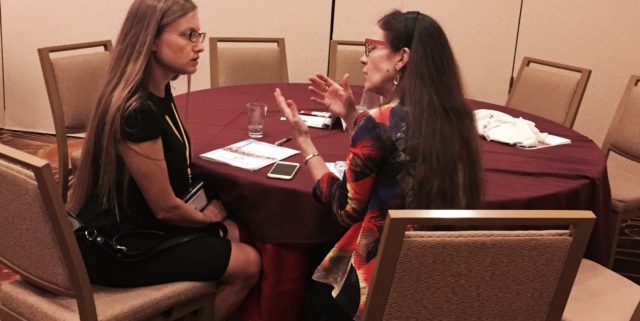
Two women are seated at a round table in a conference room, directly facing each other as they engage in deep discussion. The woman on the left clasps her hands on her lap and looks highly focused. The woman on the right gesticulates with both hands raised to chest level, palms facing towards the other woman, with her fingers splayed. She appears to be explaining or emphasizing a point, or trying to convey information clearly. A tablet and notepad rest on the table between the two ladies.

Why Being There Matters: Community, Collaboration, and Care at One Retinoblastoma World 2026

One Retinoblastoma World is community, conversation, and collaboration in action. Families, survivors, and professionals unite to share knowledge and lived experience, shaping lifelong Rb care and support. WE C Hope CEO, Abby White, and WE C Hope USA President, Marissa D. Gonzalez, both Rb survivors, explore why being together in San Antonio this September matters so deeply for all in our community.

A fuzzy, brown teddy bear sits on a table with a blue table cloth. The bear has red and black plaid feet, a cream snout, black eyes, a brown nose, and a black smile. A nasograstric tube and a gastrostomy tube are inserted, and an IV pole and IV fluids are seen to the side. Behind the bear is a teddy bear sized hospital bed and a green curtain.

Play – The Key Ingredient to Pediatric Medical Care

Play is the language, university, and business of childhood. Medical play is a key part of child-focused health care, helping young patients learn, reduce fear, and take part in their care. Sophie Goldberg, child life intern and student of Child Life and Pediatric Psychosocial Care, explores what medical play is, and how you can use it to empower your child through their medical experiences.

Children’s program volunteer, Bethany, sits crisscross on the floor and holds a green stuffed animal out to two children. Linden kneels and places eye drops in the stuffed animal’s eyes while Myra and Bethany smile and watch.

Our Retinoblastoma Community Shines in the Golden City

Childhood eye cancer and its lifelong impacts can overwhelm and isolate – connecting with others who understand is vital for healing. On May 3rd, 2025, 40 young patients, survivors, families and friends gathered to celebrate and support the amazing Rb community in Northern California. Bethany Folks, WE C Hope USA Executive Assistant and Event Volunteer, reflects on a wonderful afternoon with Rb families in the Bay Area.

A young girl with a dressing over one eye sits on her mother's lap, while a medical professional crouches so his face is level with hers. He offers his open hands to her, palms up. All three people are African.

How to Advocate for Child Life Support in Your Child’s Medical Care

Parenting children through retinoblastoma is tough.  Being their chief advocate is one of your most important roles throughout their cancer experience.  Rb Survivor and WE C Hope CEO, Abby White, discusses why parents and caregivers should advocate for child life support, how to ask for child life services, and how to work effectively with child life professionals for the best outcomes.

Two adult hands rest on each side of a baby's headm in the middle of a massage stroke. The baby has a restful expression, and the backgroud is a calming lavender.

7 Infant Massage Tips for Improved Summer Sleep

Hot weather and changing holiday routines – summer can be unsettling for babies and young children. Add retinoblastoma to the mix, and achieving good sleep at this time of year can be very hard for affected children and siblings. Morgan Livingstone CCLS explains how infant massage can help, offering specific practical ways to improve sleep during sultry summer months, whether or not a child is receiving cancer care.

A group of about 20 children sit in several rows in a half-circle, each playing a colorful bongo drum. Several adults are interspersed among them, watching and helping. A lady at the front leads the whole group. Most of the children wear bright clothes, and some have light-up headbands, adding to the happy, festive atmosphere.

Retinoblastoma Family Days: Building Connection, Camaraderie, and Hope

When retinoblastoma changes everything, connection and understanding are vital. Family Days provide a soothing space for families and survivors to gather, share, and heal together. WE C Hope USA President, Marissa Gonzalez, and our blog curator, Abby White, explore how these special events foster community, joy, and hope across the retinoblastoma journey.

A child life specialist uses a unicorn horn-shaped bubble generator to distract a young girl and her father. She wears a brightly decorated black surgical cap, adorned with a flowery pink unicorn horn tiara, as well as a face mask, glasses, and surgical gloves. The father also wears a face mask and looks attentively at both the child life specialist and his daughter while securely holding the little girl. Dressed in shades of pink and surrounded by iridescent bubbles, she reaches out toward them with curious delight. In the background, a colourful mural features a smiling face, abstract shapes, and natural elements.

Distraction in Action: How to Build Kids’ Confidence and Comfort in Medical Care

Medical care can be overwhelming for children and their family, causing fear and distress. Without support, these experiences can escalate into medical trauma. WE C Hope CEO, Abby White, and Child Life Specialist, Morgan Livingstone, explore how simple distraction tools reduce anxiety, increase cooperation, and empower both children and caregivers to be calm, confident participants, even in complex medical care.

Rati puts on surgical gloves while her mum, Salome, and child life specialist Morgan look on. Both Rati and Morgan are wearing surgical masks. A medical play doll and various medical equipment are laid out beside Rati.

WE C Hope and Child Life: Bridging Gaps, Easing Trauma, Building Hope

Child life helps families cope with retinoblastoma care, reducing trauma, and building hope. Yet access remains limited worldwide. March is Child Life Month and the birthday of our beloved Rati, whose brief life inspired World Eye Cancer Hope. From her care in Canada to Kenya, One Rb World and beyond, WE C Hope CEO, Abby White, explores how child life became central to our mission.

A bald toddler sits on her mother’s lap during a port access procedure. Her back rests against her mother’s chest, and her head is turned up and back towards her mother, who is leaning down in conversation. Both mother and child are white. The nurse accessing the port is seen from behind and has fair hair.

Comfort Positions: How to Help Children Feel Safe and Supported During Medical Procedures

Medical procedures can be stressful for children, often leading to fear, resistance, and lasting anxiety. Comfort Positions offer a simple and powerful way to ease distress, ensuring a safer, more supportive experience for children, caregivers, and medical teams. WE C Hope CEO, Abby White, and Child Life Specialist, Morgan Livingstone, explore how comfort positioning transforms medical care, fostering trust, cooperation, and emotional well-being.