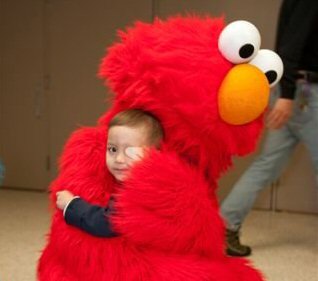
A young boy is wrapped up in a hug from an Elmo character.

A Child With Cancer Is Much More Than A “Case”: Why Words Matter in Retinoblastoma Care and Awareness

Can the language we use impact patient well-being, conduct of research and care? WE C Hope CEO and retinoblastoma survivor, Abby White, explores the effect of scientists, doctors and reporters referring to retinoblastoma patients as “cases” rather than children, and how our One Rb World community helps create a foundation of care that nurtures complete well-being.

Two young girls and a boy sit smiling in front of a Christmas tree, all wearing pyjamas. One of the girls holds a baby girl who has a white glow in her left eye.

Angels and Zebras: How Life-Saving Holiday Pics Reveal Children’s Rare Eye Cancer

Happy Holidays from World Eye Cancer Hope! We love a white Christmas and the season’s festive glow – angels, fairy lights, iced cakes, candles, and snow… But we do not like a white glow in children’s eyes. Rb Survivor and WE C Hope CEO Abby White explains how festive Holiday photos could save a child’s life, and even their sight.

A table is covered with a large sheet of white paper featuring hand-drawn, decorative letters spelling out the words: One Retinoblastoma World 2024. The words are outlined in various colours and patterns, and the letters are intricately designed with stripes, flowers, polka dots, and googly eyes. On the table, a container holds colorful markers; sheets of stickers featuring tropical and fun designs, such as flowers, palm trees, animals, and beach items; large, playful googly eyes; hand-drawn outlines of children’s hands.

One Rb World 2024 Says “Mahalo” to the Retinoblastoma Community – Day Three | Page 4

The final moments of the 7th One Rb World Conference in Honolulu, Hawaii, were dedicated to patients, families, and survivors, showcasing how empowering them can transform their individual experience and collective progress. Marissa D. Gonzalez, President of World Eye Cancer Hope USA, and Conference Event Chair, tells of the inspiring child life programming, and groundbreaking patient engaged-research building bridges of hope and healing for our retinoblastoma community worldwide.

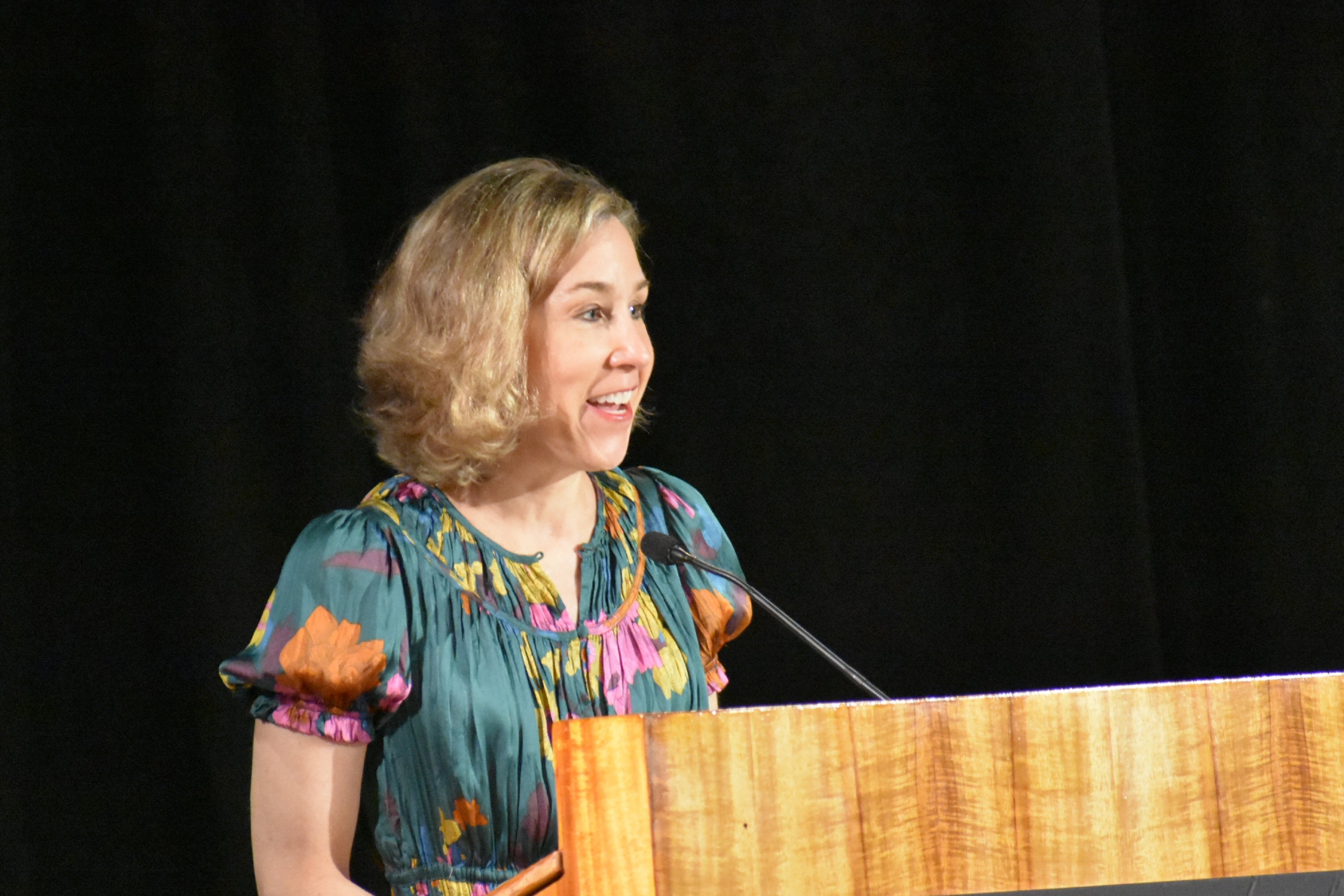
Pamela Paul stands at a light wooden podium against a black background. She wears a blue dress patterned with yellow, pink, and orange flowers.

Storytelling for Life: Global Solutions and Lifelong Care at One Rb World 2024 Day Three | Page 3

As the 7th One Rb World Conference in Honolulu, Hawaii, reached its final hours, personal insights and global initiatives took center stage. Marissa D. Gonzalez, President of World Eye Cancer Hope USA, and Conference Event Chair, reflects on the collective mission to save lives, including The New York Times Opinion feature, “It Takes a Lifetime to Survive Childhood Cancer,” – and the story behind the article.

On the left of a large conference room, a speaker stands at a wooden podium, addressing the audience. David is a white man wearing a blue suit. Beside him, fellow panelists sit at a long table draped with a cloth bearing the One Rb World logo. A large screen displays key discussion points on Retinoblastoma Survivorship Care – bullet points are out of focus. The audience is seated at round tables with white tablecloths, attentively listening and watching both the panelists and screen. The room is decorated in dark wood paneling and large murals depicting natural landscapes.

Hawaii Says “ALOHA” to the 7th One Rb World Conference and Global Retinoblastoma Community

The shores of Waikiki Beach welcomed 175 guests to the 7th One Rb World conference this month, and more online, as Honolulu played host to this incredible meeting of retinoblastoma patients, survivors, families and medical professionals. Marissa D. Gonzalez, President of World Eye Cancer Hope USA, and Conference Event Chair, reflects on the social gathering and Day One of the program in the first installment of this three-part conference review.

A composite of two photos, each showing a baby boy with identical inward turning left eye.

The Life-Saving Power of a Squint: When to Investigate a Child’s Turned Eye

Evalynn, Gabriel, Abby and John all developed strabismus (squint or turned eye), one of the most common signs of retinoblastoma. This can also occur in healthy eyes or affect multiple family members without eye cancer. Sandra Staffieri, Retinoblastoma Care Co-ordinator at the Royal Children’s Hospital, Melbourne, explains, and answers the key question – when should parents and doctors be concerned?

A quote is centred near the top over a vivid ocean sunset scene. Text reads: Some journeys don't have endings, they lead to new beginnings. These are the journeys that lead to great adventures! Near the bottom of the image, smaller italicized text reads: Alex Haditaghi | from Softly, As I Leave Her, 2016. In the ocean scene, the white sun is low on the horizon, casting a golden path of sparkling light across deep blue water. The sky is rich with colour – bright goldenrod near the sun, fading into soft honey pastels and a deepening blue above. A bunting of wispy clouds reflects the warm glow.

One Retinoblastoma World: A New Realm of Discovery

When Retinoblastoma Care Co-ordinator Sandra Staffieri left Australia in August 2012 for a conference in Italy and a tour of Rb centres in North America, she had no idea how radically the journey would change her life and care at the Royal Children’s Hospital, Melbourne. Yet as she departed, One Rb World, the key destination on her trip, was not even on her itinerary. 12 years later, the impact of that trip continues…

Close-up image of a young African child wearing a cartoon pattern t-shirt, looking directly at the camera. The child's left eye has a noticeable white glow. Over the softly focused background, white text reads What if their eye is telling you something? Below a horizontal golden line is the gold KNOW THE GLOW® logo and the text PREVENT CHILDHOOD BLINDNESS. In the bottom right corner are the Kenyan flag and crests of the government and Kenyatta National Hospital, Nairobi.

Gut Feelings Matter: How Parent Instinct and Intuition Detect Childhood Eye Cancer Early

Strong parent instinct and intuition often lead to a child’s eye cancer diagnosis. Rb Survivor and WE C Hope CEO, Abby White explores what they are and how they differ, why they are so important for retinoblastoma early detection, why primary care providers should take them seriously, and how they impacted the diagnosis journey of four children.

A young African boy with short, curly black hair and a big, cheerful smile looks directly at the camera. He's wearing a cosy knitted blue sweater over a white collared shirt, and His right arm is flexed in a gesture of strength. The pupil of his right eye has a prominent pearly glow. Overlaying the wooden fence background, bold white text states "NO CHILD SHOULD DIE FROM UNDETECTED EYE CANCER." Below is a horizontal golden line. In the bottom left corner, the gold "KNOW THE GLOW®" logo is followed by the text "PREVENT CHILDHOOD BLINDNESS" in a smaller font. In the bottom right corner are the Kenyan flag and crests of the government and Kenyatta National Hospital, Nairobi.

Between Shadow and Light: Young Lives in Jeopardy from Retinoblastoma

Worldwide, children and their families grapple with life-threatening eye cancer due to delayed diagnosis and care. Unchecked, retinoblastoma has far-reaching consequences. Through two family stories, WE C Hope CEO Abby White explores the impacts of low awareness, slow referral, and delayed care, and the life-saving, sight-saving opportunities they reveal.

Close up of a smiling, playful young African boy with a shaved head, who appears to be leaning against a tree. He has big, bright, happy eyes, one of which has a creamy glow in the pupil. He is wearing a light blue sweater. Across the blurred background, bold white text reads "HELP IDENTIFY CHILDHOOD EYE CANCER EARLY".

A Glint or a Squint Could Be Your Hint: Knowledge is Key to Retinoblastoma Early Diagnosis

Critical clues to a child’s eye cancer hide in plain sight. Parent and physician knowledge, and ability to spot these silent signs are vital to early detection, swift referral, and prompt diagnosis. Meet five children from around the world whose parents’ curiosity, nagging concern, and action were pivotal to their diagnosis and life-saving, sight-saving care.