
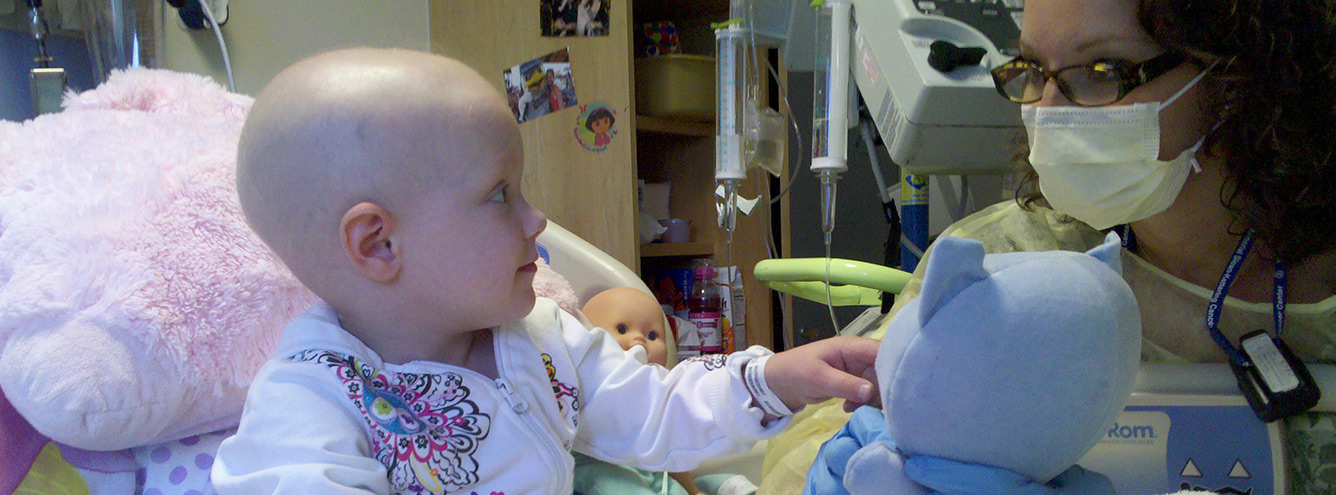
To the casual observer, child life may seem like a lot of fun to pass the time in the hospital or clinic.
Play does help keep children occupied during long, difficult hours, but it has so much more value than simple fun.
Play is the language, university and business of childhood. Children learn, interact with their world and process their experiences through play.

Child Life cares for the whole child, and play is the best way to help children cope with their medical experiences.
Play is a diversion from the rigours of hospital. Play is a distraction during difficult procedures, and a learning tool to prepare the child so they can be involved with the procedure. Play helps carers assess a child’s emotional state, identify anxieties and fears, and teach coping skills.
In short, play helps the whole child heal!
The Art of Child Life
Child life promotes effective coping through play, preparation, education and self-expression activities based on natural child development.
Explore the developmental issues, stressors, and coping behaviours of each age group. Discover the interventions, pain management and comforting techniques child life professionals and parents can use to support the infant, child or teenager.
Neonates - 0 to 30 days
Developmental Issues
- Startle reflex when moved quickly or hears loud noises
- Sucking reflex – sucks on anything placed in mouth
- Rooting reflex – opens mouth and turns head to the side where cheek is stroked
- Grasps and lets go of anything placed in hand
- Focuses on objects 8-12 inches away
- Hearing is fully mature
- Begins to gurgle, coo and grunt
- Moves head side to side while lying on stomach
Hospital Stressors
- Startles at loud noises and sudden movement
- Blinks in response to bright light
- Impaired basic needs
Coping Behaviours
- Crying
- Sucking
- Quiets to soft music, singing or gentle talking
- Soothes when rocked or swaddled in a blanket
Interventions
- Encourage parent presence and participation in care at all times
- Show parent how to touch or hold infant if connected to medical equipment
- Avoid quick movements
- Decrease noise levels and bright lights
- Avoid hunger and maintain warm room temperature
- Talk in soft, soothing voice 8-12 inches away from the infant’s face
Pain Management / Comforting Techniques
- Singing
- Soft music
- Swaddling
- Light up toys
- Infant massage
- Comfort Positioning
- Non-nutritive sucking – soother/pacifier
- Encouraging statements
Infants - Birth to 12 months
Developmental Issues
- Minimal language comprehension
- Development of trust
- Learns through senses
- Attachment to primary caretaker
- Meet basic physical needs
Hospital Stressors
- Separation from parents
- Impaired basic needs
- Stranger anxiety
Coping Behaviours
- Crying
- fussing
- Hand-mouth activity
Interventions
- Encourage parent presence and participation in care
- Show parent how to touch or hold infant if connected to medical equipment
- Involve parents in “comfort positioning” during procedures
- Decrease number of caregivers
- Avoid hunger
- Talk before touching
- Maintain adequate room temperature
Pain Management/Comforting Techniques
- Singing
- Soft music
- Light up toys
- Infant massage
- Comfort Positioning
- Non-nutritive sucking – soother/pacifier
- Encouraging statements
Toddlers – 1 to 3 years
Developmental Issues
- Short attention span
- Seeks independence
- Developing language skills
- Mobility is means to learning
- Threatened by changes in routine
- Learns new skills such as walking and toilet training
Hospital Stressors
- Stranger anxiety
- Change in routine
- Unfamiliar environment
- Loss of autonomy and mobility
- Back-laying position frightens toddlers
- Separation from parent and fear of abandonment
- Respond fearfully to sudden movements or loud noises
Coping Behaviours
- Regression of recently learned developmental skills
- Clinging behaviour
- Temper tantrums
Interventions
- Encourage parent presence and participation
- Expect treatment to be resisted
- Offer choices when possible
- Provide simple explanations
- Maintain daily schedule
- Allow for motor activity
Pain Management/Comforting Techniques
- Music
- Videos
- Singing
- Bubbles
- Light up toys
- Infant Massage
- Favourite object
- Comfort Positioning
- Encouraging statements
Preschoolers - 3 to 5 years
Developmental Issues
- Fears the dark
- Learns best by doing
- Limited concept of time
- Fantasy and magical thinking
- Does not understand death as final
- Increased, yet limited language skills
- Egocentric (the world revolves around me)
- Views hospitalization and illness as a punishment
Hospital Stressors
- Separation from parent
- Feels unprotected and a sense of abandonment
- Unable to distinguish between fantasy and reality
- Misconceptions develop from lack of understanding
- Heightened fears (pain, strangers, medical equipment)
- Loss of competence and initiative in developmental tasks
Coping Behaviours
- Guilt
- Fantasy
- Temper tantrums
- Aggression and anger
- Regression to earlier behaviours
Interventions
- Encourage parent presence and participation in care
- Be realistic and truthful
- Correct misconceptions
- Offer choices when possible
- Encourage child participation in care
- Avoid words that provoke fantasies (cut, bleed)
- Allow expression of feelings through play and verbalisation
- Reinforce that hospitalisation, treatments and procedures are not punishment
- Let child explore equipment and explain it in concrete terms (touch, smell, taste, sound, and sight)
Pain Management/Comforting Techniques
- Videos
- Singing
- Bubbles
- Soft music
- Humour/Jokes
- Favourite object
- Comfort Positioning
- Encouraging statements
School Age – 5 to 12 Years
Developmental Issues
- Develops concrete thinking
- Heavily involved with peers
- Concerns about body image
- Increased participation in self-care
- Active learners, invent and design things
- Well-developed language skills and concept of time
Hospital Stressors
- Fears pain
- Fears death
- Fears anaesthetic
- Loss of competence
- Loss of bodily control
- Enforced dependence
- Fears body mutilation and deformities
- Fears loss of bodily functions and/or body parts
Coping Behaviours
- Acting out
- Regression
- Depression
- Withdrawal
- Cognitive mastery
- Guilt (better able to test reality of situation, although fantasies have not entirely disappeared)
Interventions
- Give child tasks to help
- Respect child’s modesty
- Offer choices when possible
- Identify and correct misconceptions
- Encourage child participation in care
- Teach coping strategies that encourage mastery
- Give specific information about the affected body part
- Help child recognise aspects of their effective coping
- Provide age-appropriate activities that foster a sense of accomplishment
Pain Management/Comforting Techniques
- Music
- Videos
- Singing
- Humour/Jokes
- Deep breathing
- Favourite object
- Comfort Positioning
- Encouraging statements
Teenagers – 12 to 18 Years
Developmental Issues
- Needs privacy
- Socialising is important
- Rapidly changing body image
- Struggles to develop self-identity
- Body image relates to self-esteem
- Increasing independence and responsibility
- Uses deductive reasoning and abstract thought
Hospital Stressors
- Lack of trust
- Fear of death
- Restricted physical activities
- Threat to bodily competence
- Threat to future competence
- Threat of change in body image
- Loss of independence and control
- Loss of peer acceptance and/or fear of rejection
Coping Behaviours
- Conformity
- Intellectualisation
- Defence mechanisms
- Uncooperative behaviour
Interventions
- Be honest
- Allow peers to visit
- Respect and maintain privacy
- Address long-term issues in follow-up
- Involve adolescent in care and decisions
- Discuss potential psychological and physical changes
- Provide opportunity for follow-up discussion and guidance as needed
Pain Management/Comforting Techniques
- Music
- Videos/DVDs
- Humour/Jokes
- Deep breathing
- Guided Imagery
- Writing personal journal
- Encouraging statements