Tag Archive for: medical play

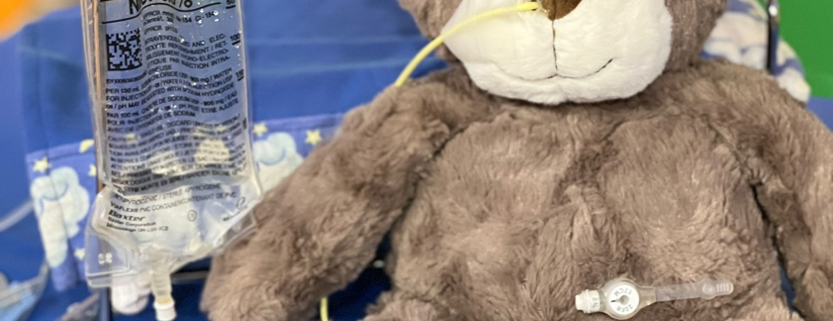
A fuzzy, brown teddy bear sits on a table with a blue table cloth. The bear has red and black plaid feet, a cream snout, black eyes, a brown nose, and a black smile. A nasograstric tube and a gastrostomy tube are inserted, and an IV pole and IV fluids are seen to the side. Behind the bear is a teddy bear sized hospital bed and a green curtain.

Play – The Key Ingredient to Pediatric Medical Care

Play is the language, university, and business of childhood. Medical play is a key part of child-focused health care, helping young patients learn, reduce fear, and take part in their care. Sophie Goldberg, child life intern and student of Child Life and Pediatric Psychosocial Care, explores what medical play is, and how you can use it to empower your child through their medical experiences.
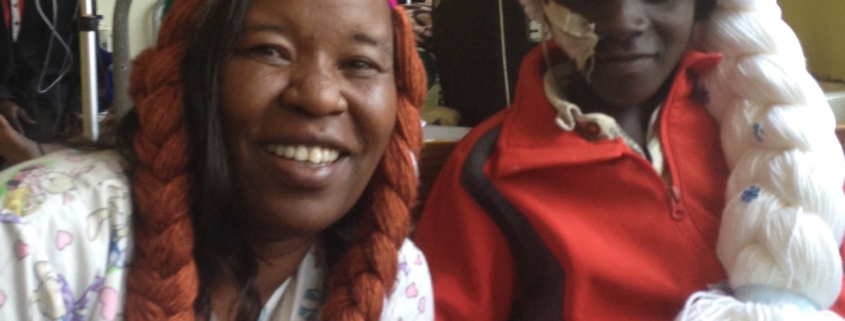
Jayne and a child are pictured wearing long yarn wigs of different colours.

Jayne Kamau, My Friend and Colleague

On March 10, 2019, our beloved child life specialist Jayne Kamau died aboard Ethiopian Airlines flight ET302 as she returned home from SIOPAfrica in Cairo. WE C Hope Child Life Director, Morgan Livingstone, reflects on more than a decade of mentoring, friendship and working together to advance child life in Kenya. Co-authored with WE C Hope CEO, Abby White.

A young child and adult sit side by side at a wooden table, deeply focused on a photo book containing images of hospital environments. The child is holding a red crayon as if poised to take some kind of action as part of their orientation. The adult smiles with warmth and encouragement while pointing at something a photo, helping the child understand what to expect.

Transforming Paediatric Care: Child life in Low- and Middle-income Countries

Most children in low- and middle-income countries face hospitalization without the vital psychosocial support they need. WE C Hope’s Certified Child Life Specialist Morgan Livingstone shares how sustainable child life programs are transforming paediatric care in under-resourced settings. She explores the power of partnership, training, and local leadership in building sustainable child life services that meet unique community needs.

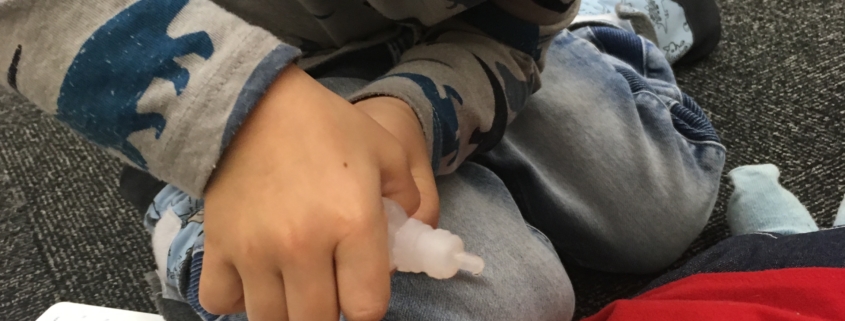
A young boy practices giving eye drops to a medical play puppet.

10 Ways to Support Your Child Through EUA for Retinoblastoma

Examinations Under Anaesthetic (EUA) are an essential part of retinoblastoma diagnosis, treatment, and surveillance follow up care. Combining content from our Child Life Resource, Morgan Livingstone CCLS CIMI MA reviews 10 ways parents can support children of all ages through the experience to benefit everyone’s wellbeing.

Rati puts on surgical gloves while her mum, Salome, and child life specialist Morgan look on. Both Rati and Morgan are wearing surgical masks. A medical play doll and various medical equipment are laid out beside Rati.

WE C Hope and Child Life: Bridging Gaps, Easing Trauma, Building Hope

Child life helps families cope with retinoblastoma care, reducing trauma, and building hope. Yet access remains limited worldwide. March is Child Life Month and the birthday of our beloved Rati, whose brief life inspired World Eye Cancer Hope. From her care in Canada to Kenya, One Rb World and beyond, WE C Hope CEO, Abby White, explores how child life became central to our mission.

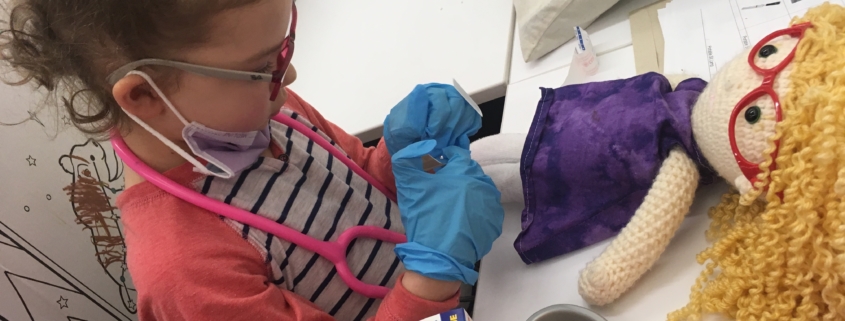
A young girl wearing medical gloves, glasses and a stethascope prepares to practive a procedure on a medical play puppet.

6 Ways to Help Older Children and Teens Cope With and Conquer Hospital Anxiety

Many children and teenagers experience anxiety with medical interactions after retinoblastoma diagnosis.  Pediatric registered nurse and child life intern, Michelle Badejo, describes how hospital anxiety can manifest, and explores how parents can help them cope, be active participants in their ongoing care, and raise their quality of life.