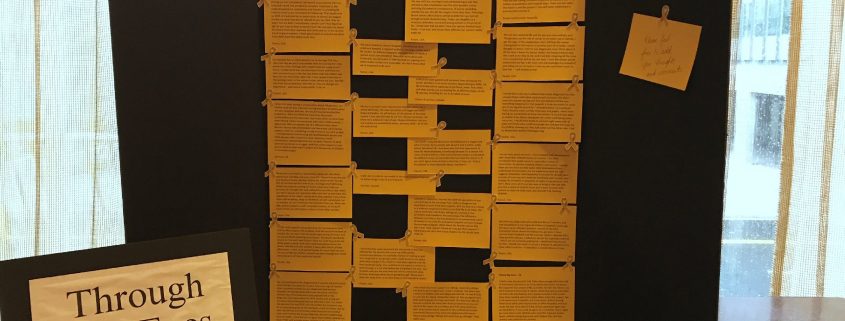
A table-top display is set up against tall windows that let in soft daylight. Yellow cards are neatly arranged across the black tri-fold presentation board, each one held in place with a small gold awareness ribbon sticker. Every card shares a printed personal story or message. On the left side of the table, a white sign mounted on black backing is titled: Through Our Eyes and notes the display is sponsored by Kyriaki’s Retinoblastoma Foundation. In front of the board on the table are two pens, a small stack of blank yellow cards for visitors to write on, and a roll of decorative gold ribbon stickers. On the right panel of the display board, one yellow card stands slightly apart from the others, with a handwritten invitation: Please feel free to add your thoughts and comments.

Through Our Eyes at One Retinoblastoma World 2017

Parents and survivors shared their thoughts on the “Through Our Eyes” wall at the One Rb World meeting in Washington D.C., 9-11 October 2017. These powerful insights were gathered anonymously via this website during September 2017, and highlight wide-ranging concerns.
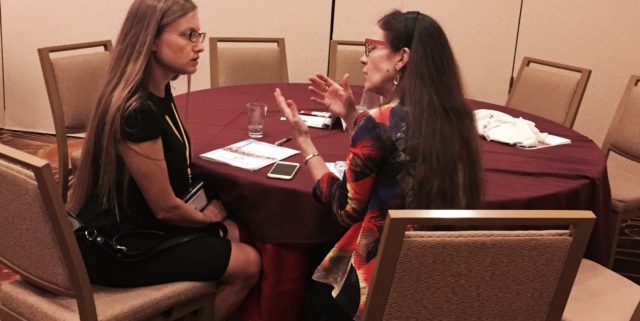
Two women are seated at a round table in a conference room, directly facing each other as they engage in deep discussion. The woman on the left clasps her hands on her lap and looks highly focused. The woman on the right gesticulates with both hands raised to chest level, palms facing towards the other woman, with her fingers splayed. She appears to be explaining or emphasizing a point, or trying to convey information clearly. A tablet and notepad rest on the table between the two ladies.

Why Being There Matters: Community, Collaboration, and Care at One Retinoblastoma World 2026

One Retinoblastoma World is community, conversation, and collaboration in action. Families, survivors, and professionals unite to share knowledge and lived experience, shaping lifelong Rb care and support. WE C Hope CEO, Abby White, and WE C Hope USA President, Marissa D. Gonzalez, both Rb survivors, explore why being together in San Antonio this September matters so deeply for all in our community.

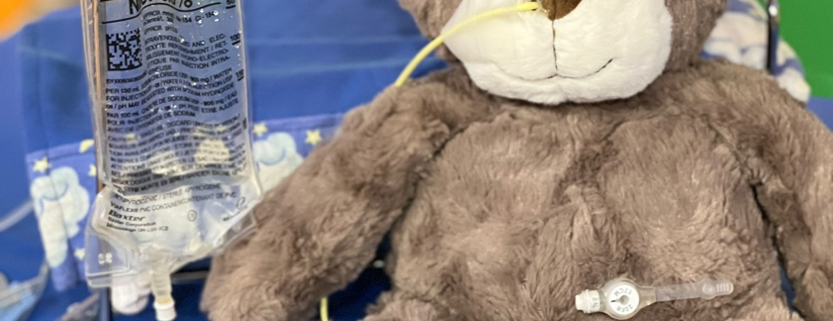
A fuzzy, brown teddy bear sits on a table with a blue table cloth. The bear has red and black plaid feet, a cream snout, black eyes, a brown nose, and a black smile. A nasograstric tube and a gastrostomy tube are inserted, and an IV pole and IV fluids are seen to the side. Behind the bear is a teddy bear sized hospital bed and a green curtain.

Play – The Key Ingredient to Pediatric Medical Care

Play is the language, university, and business of childhood. Medical play is a key part of child-focused health care, helping young patients learn, reduce fear, and take part in their care. Sophie Goldberg, child life intern and student of Child Life and Pediatric Psychosocial Care, explores what medical play is, and how you can use it to empower your child through their medical experiences.

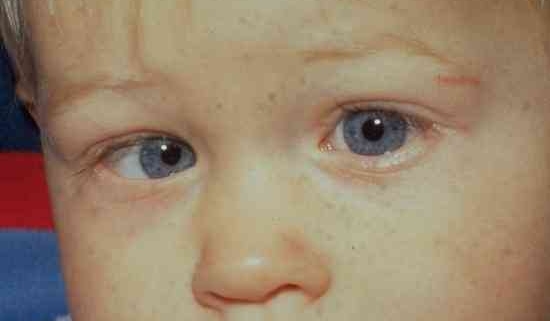
A baby has a squint - the right eye is rutned in towards the nose.

18 Commonly Confused Retinoblastoma Terms, What They Mean and Why Getting Them Right Matters.

Do you know the difference between lazy eye and squint, or an ocular oncologist and a paediatric oncologist? Do you know when extraocular Rb becomes metastatic, or why trilateral Rb is neither of these? In Part 1 of a mini-series, WE C Hope CEO Abby White explains these and other terms, and why using them correctly is important.

The Informed Parent: 6 Tips for Staying Up to Date in a Social Media World

Google, AI, and social media play an increasingly significant role in the lives of families affected by retinoblastoma, but without careful use, they can complicate a child’s medical care and even put life at risk. Dr. Jesse Berry shares her recommendations for being a safely informed, engaged parent advocate in the modern hyper-connected age.

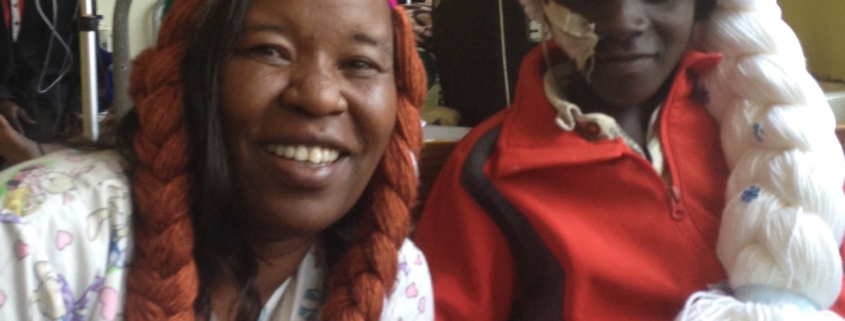
Jayne and a child are pictured wearing long yarn wigs of different colours.

Jayne Kamau, My Friend and Colleague

On March 10, 2019, our beloved child life specialist Jayne Kamau died aboard Ethiopian Airlines flight ET302 as she returned home from SIOPAfrica in Cairo. WE C Hope Child Life Director, Morgan Livingstone, reflects on more than a decade of mentoring, friendship and working together to advance child life in Kenya. Co-authored with WE C Hope CEO, Abby White.

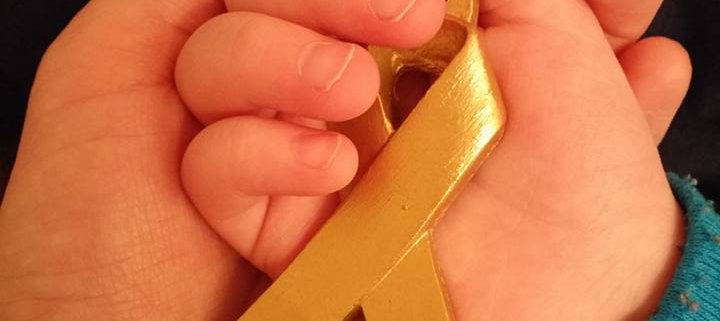
A child's hand grasps a gold ribbon. The child's hand rests in the palm of an adult hand.

Are You Childhood Cancer Aware?

Why should we be concerned about childhood cancer awareness when it accounts for only 1-3% of all cancers? Surely its rarity means the impact on society and childhood deaths is low? Not True! Bilateral Rb survivor and WE C Hope CEO, Abby White, explores the realities of childhood cancer, sharing personal experience, and insights from parents and fellow survivors,

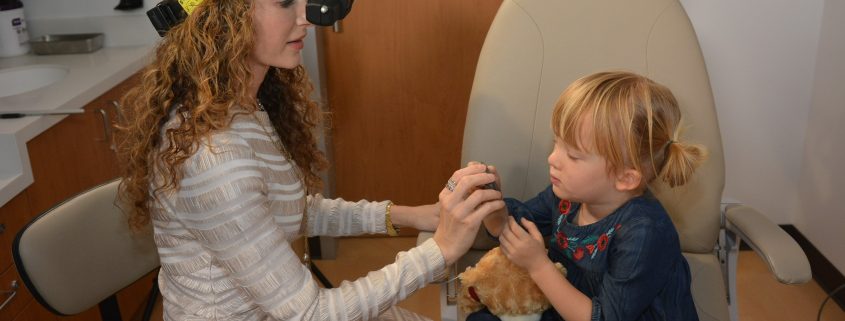
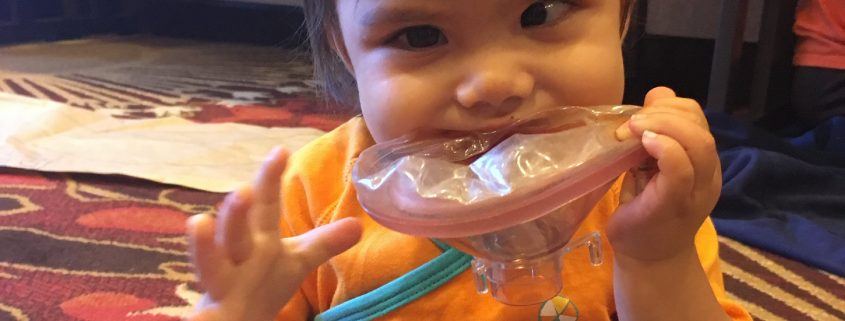
a baby plays with an anaesthetic mask

7 Ways Caregivers Can Support Infant Mental Health during Cancer Care.

Infants experience a wide range of emotions, the depths of which are just beginning to be understood. Morgan Livingstone CCLS discusses how the external environment influences infant mental health, and the varied ways parents and medical professionals can help babies cope and thrive through medical interventions.

A group of about 20 children sit in several rows in a half-circle, each playing a colorful bongo drum. Several adults are interspersed among them, watching and helping. A lady at the front leads the whole group. Most of the children wear bright clothes, and some have light-up headbands, adding to the happy, festive atmosphere.

Retinoblastoma Family Days: Building Connection, Camaraderie, and Hope

When retinoblastoma changes everything, connection and understanding are vital. Family Days provide a soothing space for families and survivors to gather, share, and heal together. WE C Hope USA President, Marissa Gonzalez, and our blog curator, Abby White, explore how these special events foster community, joy, and hope across the retinoblastoma journey.

A young child and adult sit side by side at a wooden table, deeply focused on a photo book containing images of hospital environments. The child is holding a red crayon as if poised to take some kind of action as part of their orientation. The adult smiles with warmth and encouragement while pointing at something a photo, helping the child understand what to expect.

Transforming Paediatric Care: Child life in Low- and Middle-income Countries

Most children in low- and middle-income countries face hospitalization without the vital psychosocial support they need. WE C Hope’s Certified Child Life Specialist Morgan Livingstone shares how sustainable child life programs are transforming paediatric care in under-resourced settings. She explores the power of partnership, training, and local leadership in building sustainable child life services that meet unique community needs.