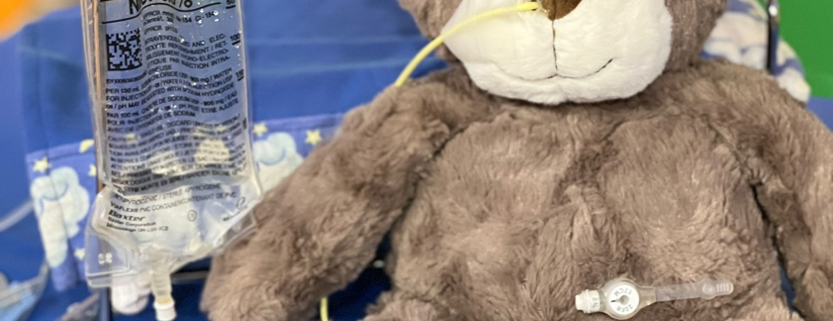
A fuzzy, brown teddy bear sits on a table with a blue table cloth. The bear has red and black plaid feet, a cream snout, black eyes, a brown nose, and a black smile. A nasograstric tube and a gastrostomy tube are inserted, and an IV pole and IV fluids are seen to the side. Behind the bear is a teddy bear sized hospital bed and a green curtain.

Play – The Key Ingredient to Pediatric Medical Care

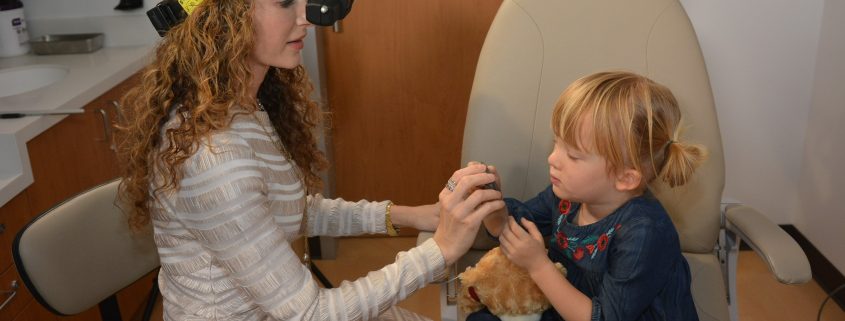
Play is the language, university, and business of childhood. Medical play is a key part of child-focused health care, helping young patients learn, reduce fear, and take part in their care. Sophie Goldberg, child life intern and student of Child Life and Pediatric Psychosocial Care, explores what medical play is, and how you can use it to empower your child through their medical experiences.
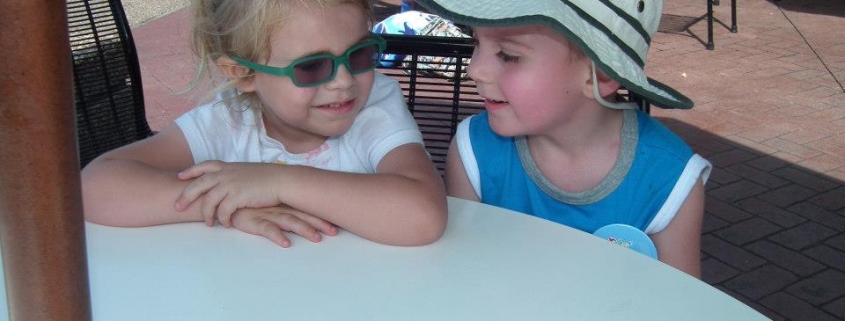
Rowan and Harry sit at a table, chatting.

Friendships Through Retinoblastoma

A diagnosis of childhood cancer can leave parents feeling adrift and utterly alone. The friends who walk with them through their child’s medical care are often cherished lifelong, and from a central thread in their own healing. Megan Santos reflects on the many friendships formed before, during and after her daughter’s treatment for retinoblastoma.

A woman faces a crying young girl, gazing at her with a concerned expression as the child site with her head in her hands. She is resting one comforting hand against the girl’s head, and the other on her opposite forearm.

Your Child is Not Misbehaving: How Stress Affects Behaviour

All children exhibit undesirable behaviour at times, particularly when they are stressed, but deliberate misbehaviour is rare. Paediatric nurse and child life specialist, Cindy Pilchuk, explores how a child’s brain responds to stress and emotional overwhelm, what their stress behaviour may be trying to say, and how parents and caregivers can help children cope better.

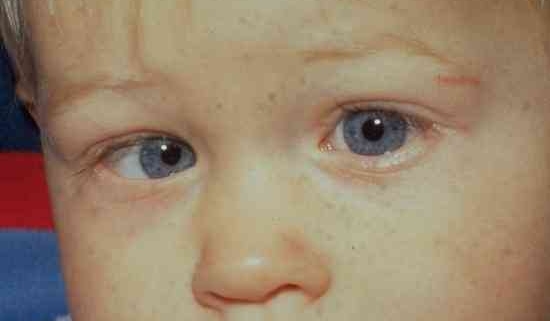
A baby has a squint - the right eye is rutned in towards the nose.

18 Commonly Confused Retinoblastoma Terms, What They Mean and Why Getting Them Right Matters.

Do you know the difference between lazy eye and squint, or an ocular oncologist and a paediatric oncologist? Do you know when extraocular Rb becomes metastatic, or why trilateral Rb is neither of these? In Part 1 of a mini-series, WE C Hope CEO Abby White explains these and other terms, and why using them correctly is important.

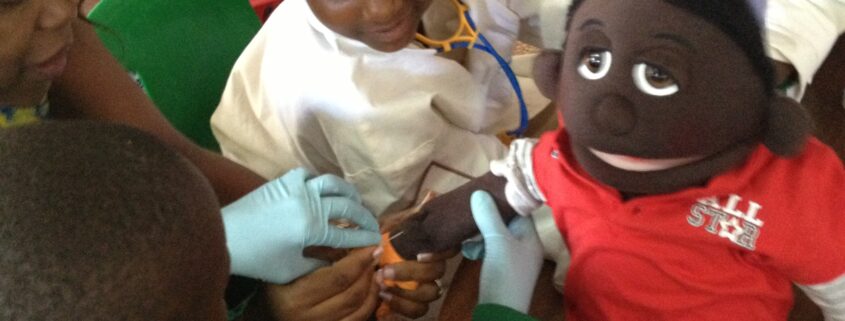
Young patients put a brannula in the arm of a medical play puppet. They are wearing surgical gloves.

Child Life in Kenya: The Sally Test Child Life Program

Children with cancer experience invasive procedures and stressful events throughout their medical care that can impact their ability to cope, inhibit their development and negatively affect their health and well-being throughout life. Child life supports effective healthcare and reduces trauma. Morgan Livingstone CCLS describes how WE C Hope is bringing hope through Child Life to children and their families in Africa.

The Informed Parent: 6 Tips for Staying Up to Date in a Social Media World

Google, AI, and social media play an increasingly significant role in the lives of families affected by retinoblastoma, but without careful use, they can complicate a child’s medical care and even put life at risk. Dr. Jesse Berry shares her recommendations for being a safely informed, engaged parent advocate in the modern hyper-connected age.

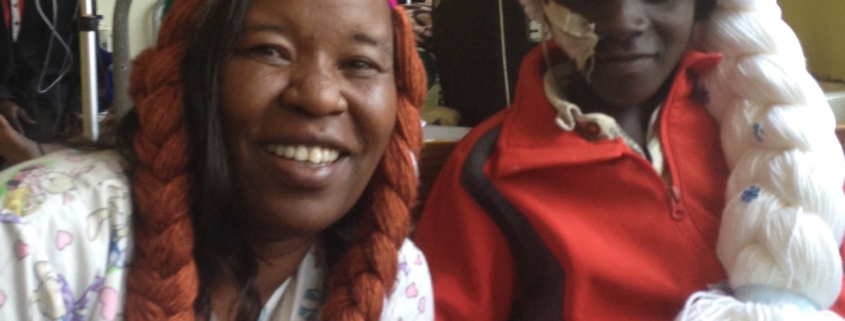
Jayne and a child are pictured wearing long yarn wigs of different colours.

Jayne Kamau, My Friend and Colleague

On March 10, 2019, our beloved child life specialist Jayne Kamau died aboard Ethiopian Airlines flight ET302 as she returned home from SIOPAfrica in Cairo. WE C Hope Child Life Director, Morgan Livingstone, reflects on more than a decade of mentoring, friendship and working together to advance child life in Kenya. Co-authored with WE C Hope CEO, Abby White.

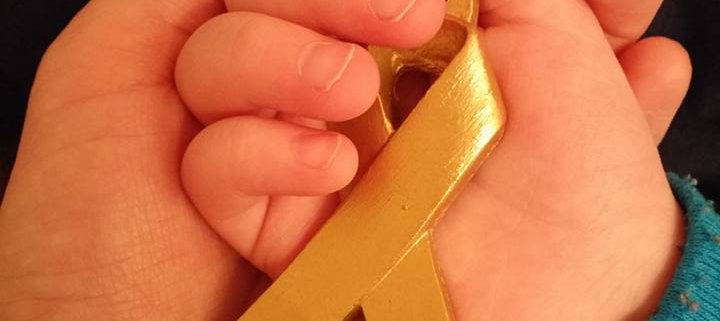
A child's hand grasps a gold ribbon. The child's hand rests in the palm of an adult hand.

Are You Childhood Cancer Aware?

Why should we be concerned about childhood cancer awareness when it accounts for only 1-3% of all cancers? Surely its rarity means the impact on society and childhood deaths is low? Not True! Bilateral Rb survivor and WE C Hope CEO, Abby White, explores the realities of childhood cancer, sharing personal experience, and insights from parents and fellow survivors,

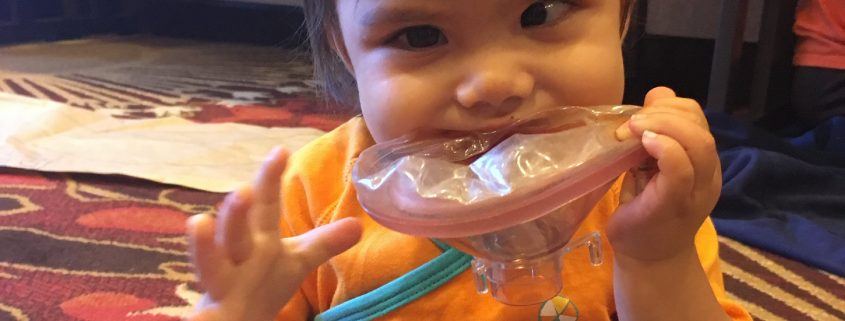
a baby plays with an anaesthetic mask

7 Ways Caregivers Can Support Infant Mental Health during Cancer Care.

Infants experience a wide range of emotions, the depths of which are just beginning to be understood. Morgan Livingstone CCLS discusses how the external environment influences infant mental health, and the varied ways parents and medical professionals can help babies cope and thrive through medical interventions.

Children’s program volunteer, Bethany, sits crisscross on the floor and holds a green stuffed animal out to two children. Linden kneels and places eye drops in the stuffed animal’s eyes while Myra and Bethany smile and watch.

Our Retinoblastoma Community Shines in the Golden City

Childhood eye cancer and its lifelong impacts can overwhelm and isolate – connecting with others who understand is vital for healing. On May 3rd, 2025, 40 young patients, survivors, families and friends gathered to celebrate and support the amazing Rb community in Northern California. Bethany Folks, WE C Hope USA Executive Assistant and Event Volunteer, reflects on a wonderful afternoon with Rb families in the Bay Area.