18 Commonly Confused Retinoblastoma Terms, What They Mean, and Why Getting Them Right Matters
Originally published: Sunday November 25, 2018 | Republished: Monday October 27, 2025.
Do you know the difference between a lazy eye and a squint, or an Ocular Oncologist and a Paediatric Oncologist? Do you know when extraocular retinoblastoma becomes metastatic, or why trilateral retinoblastoma is neither of these? WE C Hope CEO Abby White explains these and other terms, and why using them correctly is important.
Navigating life with retinoblastoma can be a very confusing experience. Even before diagnosis, families rapidly amass information from medical professionals, support organizations, other parents and survivors, general awareness, and Doctor Google. The process reveals a bewildering slew of terms whose meanings or connection with other terms may be unclear.
Below, we define eighteen commonly confused sets of terms, and discuss why confusion is harmful and getting them right is important.
Contents
- Lazy Eye and Squint
- Ocular Oncologist and Paediatric Oncologist
- Unilateral and Bilateral Retinoblastoma
- Extraocular, Metastatic, and Trilateral Rb
- Secondary Cancer and Second Primary Cancer
- New Tumour, Seeds, and Relapse
- Biopsy and Pathology
- Remission and Cure
- Child life and Play Therapy
- Eye Transplant and Corneal Transplant
- Focal, Whole Eye, and Systemic Chemotherapy
- Experience and Opinion
- Genetic Counselling and Genetic Testing
- RB1 Gene and RB1 Gene Mutation
- Retinoma and Retinoblastoma
- Somatic and Sporadic Cell Mutation
- Heritable, Hereditary, and Familial
- RB1 Gene Deletion and Chromosome 13q Deletion
1. Lazy Eye and Squint
Lazy Eye: medically termed amblyopia – usually affecting one eye, the eye doesn’t develop properly and vision is below normal, even with prescription glasses or contact lenses.
Squint: medically termed strabismus – the eyes are misaligned, either inward (esotropia), outward (exotropia), upward (hypertropia) or downward (hypotropia). Strabismus can be constant or intermittent.
Why This Matters
Lazy eye is not a sign of retinoblastoma, but parents often incorrectly refer to squint as “lazy eye” when describing what alerted them to their child’s eye cancer. Squint is a common sign of retinoblastoma, often incorrectly dismissed by primary health professionals as a condition that will resolve naturally with age. Using the correct term is vital to raise awareness of squint as an early sign of retinoblastoma, and to avoid confusion that can delay diagnosis.

This baby has esotropia, a type of squint in which one or both eyes turns in towards the nose.
2. Ocular Oncologist and Paediatric Oncologist
Ocular Oncologist: An ophthalmologist (eye doctor) who specialises in treating cancers of the eye. After training in ophthalmology, they have completed a further fellowship in cancers of the eye. They may have taken an additional fellowship in the treatment of retinoblastoma. The doctor may or may not be a paediatric ophthalmologist – an eye doctor who has completed a further fellowship in the treatment of children’s eye conditions.
Paediatric Oncologist: A children’s doctor who specialises in the treatment of cancer. After training in paediatrics, they have taken additional fellowships in the treatment of childhood cancer. This may or may not include specialism in the treatment of retinoblastoma.
Why This Matters
Children with retinoblastoma should be treated by an experienced ophthalmologist and oncologist who work together to plan and deliver care. They bring together different areas of expertise that are vital to retinoblastoma care.
The paediatric oncologist may or may not have specific knowledge of retinoblastoma management, and cannot independently treat the cancer with the goal of saving sight. The ocular oncologist may or may not have experience of managing the whole-body and psychological effects of cancer, can rarely deliver eye-salvage therapy without paediatric oncology collaboration, and cannot independently treat cancer that has spread beyond the eye.
When cancer is contained in the eye, the ophthalmologist leads the medical team. When cancer has spread outside the eye, the oncologist will lead the team. But the two disciplines should always work together for the best outcome.
3. Unilateral and Bilateral Retinoblastoma
Unilateral: One or more tumours affecting only one eye.
Bilateral: One or more tumours affecting both eyes.
Why This Matters
Retinoblastoma does not spread from one eye to the other. Individual tumours arise from unique retinal cells in each eye as genetic mutations occur in that individual retinal cell. Multiple tumours in both eyes are common in children with a heritable RB1 mutation. The presence of retinoblastoma in one eye does not affect the process of genetic mutations within other retinal cells in the same eye or the other eye.
4. Extraocular, Metastatic, and Trilateral Retinoblastoma
Extraocular Retinoblastoma: Cancer that has spread anywhere outside the eye, e.g. the orbital tissues, lymph nodes, optic nerve, and beyond.
Metastatic Retinoblastoma: Cancer that has spread to distant sites beyond the eye e.g. the brain, bone marrow or other parts of the body.
Trilateral Retinoblastoma: A rare type of primary retinoblastoma arising in the pineal gland, suprasellar or parasellar region of the brain. TRb affects only children with a heritable RB1 mutation, and brain cells that are similar to retinal cells.
Why This Matters
Trilateral retinoblastoma is entirely independent of cancer within the eye – it does not spread from the eye and is thus completely different from metastatic retinoblastoma. Primary trilateral retinoblastoma may itself become metastatic if it spreads to other distant parts of the brain or spine or other parts of the body.
When retinoblastoma spreads from the eye, cancer cells in the new location are cancerous retinal cells. When trilateral retinoblastoma develops, the cancer is formed of cancerous brain cells. For this reason, different treatments may be more or less effective for cancer that has spread from the eye and trilateral retinoblastoma.
When a child with retinoblastoma develops cancer in the brain after initial treatment of their eye cancer, correct diagnosis has important implications for care beyond direct treatment of the brain cancer.
If the child was previously diagnosed with unilateral retinoblastoma, a diagnosis of trilateral retinoblastoma will also imply a heritable RB1 mutation that may previously have been unknown. Genetic testing will be important to confirm this and identify any blood relatives at risk of developing retinoblastoma.
If the child received eye salvage therapy, correctly diagnosing subsequent brain cancer is vital. Both for the child and family’s welfare, and to record true figures of metastatic cancer after eye salvage. This is particularly important when the child has a known or suspected heritable RB1 mutation, and thus a risk of trilateral retinoblastoma, as well as a potential risk for metastatic retinoblastoma.

Damian’s cancer spread to his brain after eye salvage therapy.
5. Secondary Cancer and Second Primary Cancer
Secondary Cancer: Another term for metastatic cancer – cancer that has spread from the original site to another part of the body.
Second Primary Cancer: A second (or subsequent) cancer that is not directly related to the original cancer, arising in a different organ or tissue.
Why This Matters
The terms secondary cancer and second primary cancer are often used interchangeably, but they mean very different things.
Secondary retinoblastoma has spread from the eye to the brain, bone marrow or other distant sites. The cancer at the secondary site is made up of cancerous retinal cells that have travelled from the eye to that location. Second primary cancers arise directly from the cells of the bone, skin, soft tissue, brain or other tissue or organ affected – they are not a metastasis of the original retinoblastoma.
Secondary retinoblastoma can potentially occur in any child with retinoblastoma. Any child who is diagnosed late or not at all, whose treatment is delayed, or who is treated inappropriately. Risk of secondary retinoblastoma can be reduced or eliminated entirely by diagnosing children early and ensuring appropriate treatment and follow up care for every stage of cancer.
There is no increased risk of second primary cancer for a child with non-heritable retinoblastoma who did not receive chemotherapy or radiotherapy.
Second primary cancer risk is high in carriers of a heritable RB1 mutation, and elevated in children treated with chemotherapy or radiotherapy. Risk can be reduced by avoiding over-treatment with chemotherapy and radiotherapy, but it remains high in carriers of an RB1 mutation. Lifelong follow-up care, regular imaging, and investigation of unexplained symptoms are vital for this group of survivors.
Understanding the difference between secondary and second primary cancers can help parents and survivors explain and clarify risk. Especially when conveying information to primary doctors and other medical professionals who may not be familiar with retinoblastoma and lifelong risks.
6. New Tumour, Seeds, and Relapse
New Tumour: Tumours that form in the eye after the initial diagnosis of retinoblastoma. New tumours can arise at any time while the eye continues to develop. The risk reduces with age, and usually disappears completely by age 5-6.
Seeds: fragments of cancerous cells that break off the main tumour, float into the fluid between the retina and the choroid (subretinal seeds) or the fluid-filled centre of the eye (vitreous seeds), and begin to grow independently.
Relapse: Cancer that becomes active again after a period of remission. A relapse may occur within the eye after eye salvage therapy, or outside the eye after eye salvage therapy or enucleation. The risk of relapse may continue for several years beyond active treatment, depending on the child’s diagnosis and treatment history. Doctors sometimes describe relapsed tumour as “new tumour growth”.
Why This Matters
New tumours are very common in children with a heritable RB1 mutation, but do not occur in children with non-heritable retinoblastoma.
Having more than one tumour in one eye strongly indicates the child’s risk for a heritable RB1 mutation, but differentiating between true tumour and a large seed that look like a unique tumour can be very difficult.
If a child with unilateral retinoblastoma is diagnosed with “new tumour growth” during or after eye salvage therapy, it is important parents ask questions to clarify the situation. Does the child have a new tumour that was not previously detected, seeds that look like new tumours, or new growth (relapse) of the previously treated tumour? Knowing the answer will help identify other questions to ask for the child’s best care.
A baby born with retinoblastoma may have successful treatment in the first months of life, and experience no relapse. This is very positive, but their risk of new tumours continues. Another child may have multiple relapses of one or more previously treated tumours, over several months or years. Yet another child may experience a combination of new tumours and relapse of previously treated tumours over months or years. When friends and relatives understand this situation, compassionate support for the family continues beyond active treatment, through the years of surveillance care.

A pathology slide shows advanced retinoblastoma invading the optic nerve and choroid.
7. Biopsy and Pathology
Biopsy: Surgery to remove a sample of tumour for pathology analysis.
Pathology: Microscopic examination of surgically removed tissue (such as an eye) to confirm diagnosis, determine type and extent of the cancer, risk of relapse and need for further treatment.
Why This Matters
Due to the risk of spreading tumour outside the eye, surgical biopsy is never done to confirm a diagnosis of retinoblastoma. Pathology can be done safely only after surgical removal of the whole eye. Research is currently developing liquid biopsy (taken from fluid at the front of the eye) as a method of confirming retinoblastoma diagnosis without risking cancer spread, and gaining genetic information about the cancer to improve individualised care.
8. Remission and Cure
Remission: Can be partial or complete. In partial remission, signs and symptoms of cancer are reduced, and the cancer is detectible on examination, imaging scans or other tests, but it is not growing. In a complete remission, all signs and symptoms of cancer have gone and there is “no evidence of disease” (NED) – no detectable living cancer on exams, scans or other tests. Some people refer to complete remission as being “cancer free”.
Cure: When a child has been in complete remission from retinoblastoma for 5 years or more, they are considered to be cured of the eye cancer.
Why This Matters
Media reports often describe a child as being “cancer free” or “cured” barely months after therapy. Readers of such articles rarely learn in follow up stories of any relapse experienced by the child. It is best to read such articles with caution, understanding that the child is in remission, and is not yet considered cured.
There is one important exception in retinoblastoma to the accepted definition of remission and evaluation of signs and symptoms. Leukocoria – white pupil – is the most common sign of retinoblastoma leading to diagnosis. However, once treatment begins, presence or absence of leukocoria does not define remission. This is because when retinoblastoma tumours die, they frequently calcify but don’t disappear completely. A white pupil reflection may continue to appear in flash photographs or dim light, even years after treatment. This is simply the light bouncing off the chalky surface of the dead tumour scar.
Cure of retinoblastoma does not reduce the risk of second primary cancers for individuals with a heritable RB1 mutation or those treated with radiotherapy. This risk remains present throughout life. However, by five years after active treatment, the risk of chemotherapy-related second primary cancer has significantly reduced.


Leukocoria – white pupil – is the most common reported early sign of retinoblastoma, and can also be caused by dead tumour scars. The photo on the left led to the child’s diagnosis. The photo on the right was taken years after treatment that saved the child’s eyes.
9. Child life and Play Therapy
Child Life: Preparation, education, distraction and psychological supports using play, based on natural child development, designed to help the child cope with serious illness and other traumatic life events that are happening to them now.
Play Therapy: A form of counselling or psychotherapy in which play helps children express and manage strong feelings, share and work through difficult experiences, and cope with trauma that has happened in the distant or recent past.
Why This Matters
Both child life and play therapy harness a child’s natural ability for self-expression, discovery, learning and mastery through play. Both help children safely explore their feelings, work through difficult experiences, improve communication, solve problems and learn healthy ways of coping. But their roles are quite different.
In retinoblastoma care, child life specialists work with babies and children who are currently undergoing medical care, or are expected to undergo medical procedures. Their goal is to help prevent or reduce trauma from the experience, and improve the child’s quality of life.
In contrast, play therapists work with children already affected by trauma, and children who have other mental health concerns. Their goal is to help children articulate and understand their experiences and feelings, manage their emotions, and improve their mental health.
An experienced play therapist can help a child work through the traumatic aftermath of retinoblastoma treatment. But highly skilled child life specialists integrated into the ophthalmology and oncology clinics can prevent that trauma from ever developing.
Confusion arises because of the varying terms worldwide. For example, in the UK, child life specialists are called “hospital play specialists”. This term was also used in Australia until recently when it was changed to “child life therapist”. As a result, some medical professionals incorrectly refer to child life specialists and play specialists as “play therapists”.
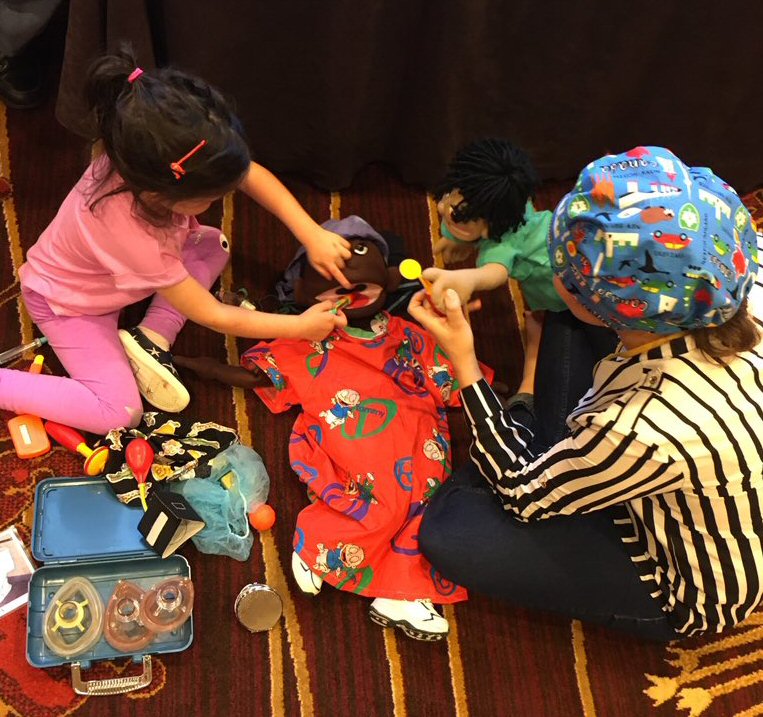
Practicing medical procedures helps children gain mastery and diffuse fear.
10. Eye Transplant and Corneal Transplant
Eye Transplant: There is no such thing as a whole-eye transplant. The optic nerve, which connects the eye to the brain, cannot currently be regrown or transplanted.
Corneal Transplant: Surgical replacement of a diseased cornea with a cornea from a deceased donor. The cornea is the clear covering that sits over the iris (coloured ring) and pupil (black circle) at the front of the eye and supports healthy vision.
Why This Matters
People often say they have heard of a miraculous “eye transplant” restoring sight. Families ask if it is possible to restore their child’s sight or cure their cancer with such a transplant. Parents resist vital life-saving eye removal surgery, believing they will destroy their child’s chance of a vision-restoring transplant if the eye is removed – and potentially curable children die as a result of these delays. Some parents regret their swift consent after the surgery, believing they were lied to about availability of the “eye transplant”.
The emotional toll is significant, and based entirely on myth and misinformation.
Corneal transplant is often incorrectly referred to as an “eye transplant” by patients, the general public, journalists, and even some doctors, causing this dangerous confusion and false hope. This is currently the only available surgery transplanting eye tissue. Corneal transplant may be beneficial for people cured of retinoblastoma who have corneal damage resulting from treatment, e.g., corneal vascularisation arising from radiotherapy. But it cannot aid the management or cure of retinoblastoma in any way.
Recommended eye removal surgery should never be delayed to investigate the possibility of an eye transplant. This option does not exist, and is extremely unlikely to become a reality within the next few decades. Surgery is only advised when life is already at risk, so delaying care further puts the child’s life in great danger.
11. Focal, Whole Eye, and Systemic Chemotherapy
Focal Chemotherapy: Injected directly into a specific location in or around the eye during EUA to target individual medium and large tumours or seeds that are not at risk to escape from the eye. Intravitreal chemotherapy (injected into the vitreous behind the lens, through the sclera) and periocular chemotherapy (injected into the space behind the eye or under the mucus membrane that coats the eye and lines the eyelids) are examples.
Whole Eye Chemotherapy: Chemotherapy is administered during EUA directly into the eye, without targeting a specific site. Currently, Intra-Arterial Chemotherapy is the only form of whole-eye chemotherapy – anticancer drugs are delivered through the ophthalmic artery, via a catheter inserted in the child’s femoral artery (in the leg).
Systemic Chemotherapy: Chemotherapy that travels around the entire body. For retinoblastoma, this is usually administered through a vein, but may be given orally. The most common systemic chemotherapy for retinoblastoma is a 3-drug regimen involving carboplatin, etoposide and vincristine.
Why This Matters
Focal and systemic chemotherapy are used in combination with laser, cryotherapy and other treatments in eye salvage therapy. Focal chemotherapy can be effective alone in treating small tumours, but neither approach is effective alone in curing medium or large retinoblastoma. Combination therapy can very effectively target larger individual tumours and seeds. Focal therapy is only used when there is no evident risk for the targeted tumours to escape the eye.
Intra-Arterial Chemotherapy (IAC) cannot target specific areas of the eye. Instead it infuses anticancer drugs through the blood supply feeding the eye, increasing potential to reach cancer cells anywhere within the eye. However, it may not treat cancer on the outer layers of the eye, and does not treat cancer that has already spread beyond the eye. Clinical studies have shown high success in saving children’s eyes when there is no risk for cancer spread beyond the eye. It is not yet clear what value IAC has as a stand-alone therapy, or the most effective combination of therapies.
Focal and systemic chemotherapy continue to have high value in treating children with retinoblastoma. Especially for babies under 6 months who are too small for IAC treatment, and children who require intensive treatment for both eyes. Some leading retinoblastoma specialists advise against bilateral simultaneous IAC treatment due to the very small but potentially devastating risk of vision loss from complications.
IAC has recently replaced combination systemic chemotherapy and focal therapy as the most common primary treatment for retinoblastoma at many specialist hospitals. If cancer cells invade outer layers of the eye or beyond at diagnosis, or at any time during treatment, the child will be under-treated and have high risk of metastatic cancer. Identifying which children can safely benefit from IAC, and the clinical features that indicate high risk to life, will ensure best care for every child when considering treatment options.

Leukocoria – white pupil – is the most common reported early sign of cancer in both unilateral and bilateral Rb.
12. Experience and Opinion
Experience: The process of acquiring knowledge or skill from doing, seeing or feeling things. Experience is neither good nor bad; it is interpreted by the individual according to their personal mind-set. An experience may not have been right for the situation, but it is always factual and can only be described by the people who have undergone it.
Opinion: An individual’s perspective about something or someone – a personal belief, view, idea, feeling or judgement. An opinion may be shaped by fact, logic, misinformation, assumption, bias, loyalty, surrounding influences, other related opinions, personal experience, personality, fears, emotions and mind-set or a combination these. Anyone can hold an opinion, whether or not they have relevant experience. That opinion may or may not be correct or appropriate.
Why This Matters
There is a fine line between experience and opinion, but it’s an important one to understand to ensure parents and survivors provide safe peer support in our retinoblastoma community.
Our opinions are limited by our individual experience, knowledge and understanding. We can’t turn back time to relive an experience differently, and we can’t all have first-hand experience of something. But our opinion about something can change over time through ongoing experiences, by broadly educating ourselves, listening to and learning from others – especially about subjects we know little about or hold a strong opinion on. By sharing our diverse first-hand human experiences and clear facts of a particular topic, we can help educate one another, broaden our collective understanding, and balance our opinions.
This is especially important when responding to parents and survivors who ask questions in our retinoblastoma community. Here is an example of how this can play out:
Opinion: “Do / Go to X. This worked great for us. You don’t need to do Y. Avoid Z if you can.”
Experience: “Our child was diagnosed with X stage of Rb and we did Y treatment at Z hospital. We had XX experience and we had YY outcome. Our child is doing ZZ today.”
The responder’s Opinion assumes X treatment or hospital is appropriate for the individual child and is accessible to the family. But this is impossible to know without full knowledge and understanding of the child’s medical record and the family’s personal circumstances, so a potentially very dangerous assumption. There is no supportive experiential information to help the parent make an informed decision or give real hope.
In contrast, the Experience shares the same factual information, but wrapped in a personal story of real value. The responding parent includes the stage of diagnosis so the enquiring parent can put the story in context and compare it to their own child’s situation. They describe the treatment experience and outcome, and end with an encouraging update of how their child is now. There’s no overt opinion here, and the enquiring parent has much more information from which to develop an informed opinion of the options, in combination with information given by the child’s doctors.
13. Genetic Counselling and Genetic Testing
Genetic counselling: An educational process for individuals and families affected by or at risk for heritable disease. Provides information on the lifelong implications of a genetic mutation, risk for other family members, screening protocols and reproductive options. A Genetic Counsellor can organise genetic testing.
Genetic testing: The process of analyzing the gene or genes of an individual to confirm, eliminate or reduce the risk that a heritable mutation is present.
Why This Matters
Genetic counselling can greatly enhance the care of children with retinoblastoma and survivors, even when genetic testing is unavailable or inaccessible. The process can identify at risk children for early screening, and help parents understand why screening from birth is necessary. Whenever it is available, genetic counselling should be offered and welcomed, even if genetic testing is not available or if the family does not wish to pursue testing.
14. RB1 Gene and RB1 Gene Mutation
RB1 Gene: RB1 also has a role in genome integrity – keeping DNA healthy.
RB1 Gene Mutation: A change in DNA sequence that damages RB1 gene function and may cause cancer to develop, or contribute to its growth. Retinoblastoma occurs when both copies of the gene become mutated in a retinal cell.
Why This Matters
Everyone has two copies of the RB1 gene. When RB1 is working correctly, it helps to prevent cancer from developing. It is thus incorrect to describe the presence of an RB1 mutation in a retinoblastoma patient as “I/my child has the gene”. This fails to recognise the key role of RB1 in preventing cancer in people who do not have an RB1 mutation. This is particularly significant as RB1 was the first tumour suppressor gene ever identified.
“I have a heritable RB1 gene mutation” or “he has a mosaic RB1 mutation” is correct. This also helps clarify the genetic situation to the child as they grow up, and to primary care providers who are responsible for lifelong medical care.

Playing with an anaesthetic mask, this child practices taking deep breaths in and out. Genetic counselling can identify all children at risk of retinoblastoma who need regular eye exams under general anaesthetic to find cancer early. Genetic testing can eliminate risk and the stressful anaesthetic process for 90-95% of these children.
15. Retinoma and Retinoblastoma
Retinoma: A benign retinal tumour that forms when both copies of the RB1 gene become mutated in a single retinal cell. The genetic make-up of the cell usually becomes unstable, leading to a cascade of mutations in other genes in the cell.
Retinoblastoma: Malignant cancer that develops when a chain of genetic mutations follow mutation of both RB1 genes in a single retinal cell.
Why This Matters
The combination of gene mutations, and the nature of each genetic mutation, defines how aggressive the individual tumour will be. This is why two children with familial retinoblastoma can have very different experiences – one with few tumours that are easy to treat, and the other with many aggressive tumours. This is also why one eye can have some very easy-to-treat tumours while others regrow after every treatment.
Rarely, some mechanism slows or stops the domino effect of genetic mutations happening after initial mutation of the RB1 genes. So the retinoma remains a benign tumour. It may never be diagnosed if it remains stable and causes no issues.
When a child is diagnosed with retinoblastoma, doctors examine the eyes of the parents and siblings. If they find a retinoma, it is more likely that parent or sibling, and the diagnosed child, has a previously unknown hereditary RB1 mutation.
Individuals with a known retinoma should be followed by an ocular oncologist who is familiar with retinoblastoma and its treatment at the very earliest stages.
16. Somatic and Sporadic Cell Mutations
Somatic Cell Mutation: A mutation that has occurred in any cell other than the germ cells (egg or sperm) and is therefore neither inherited nor passed on to children – it is non-heritable.
Sporadic Cell Mutation: A mutation that has occurred at or after conception and is therefore not inherited from a parent. This can refer to a somatic (non-heritable) mutation or a heritable mutation that can be passed to the next generation.
Why This Matters
Parents sometimes describe their child as having “sporadic retinoblastoma” before genetic testing, when there is no known family history of childhood eye cancer. This may be incorrect as it is possible for a parent to be an unknown carrier of an RB1 mutation who never developed retinoblastoma. Only genetic testing can identify if retinoblastoma is caused by a sporadic or somatic cell mutation, and any risk that other family members carry a previously unknown RB1 mutation.
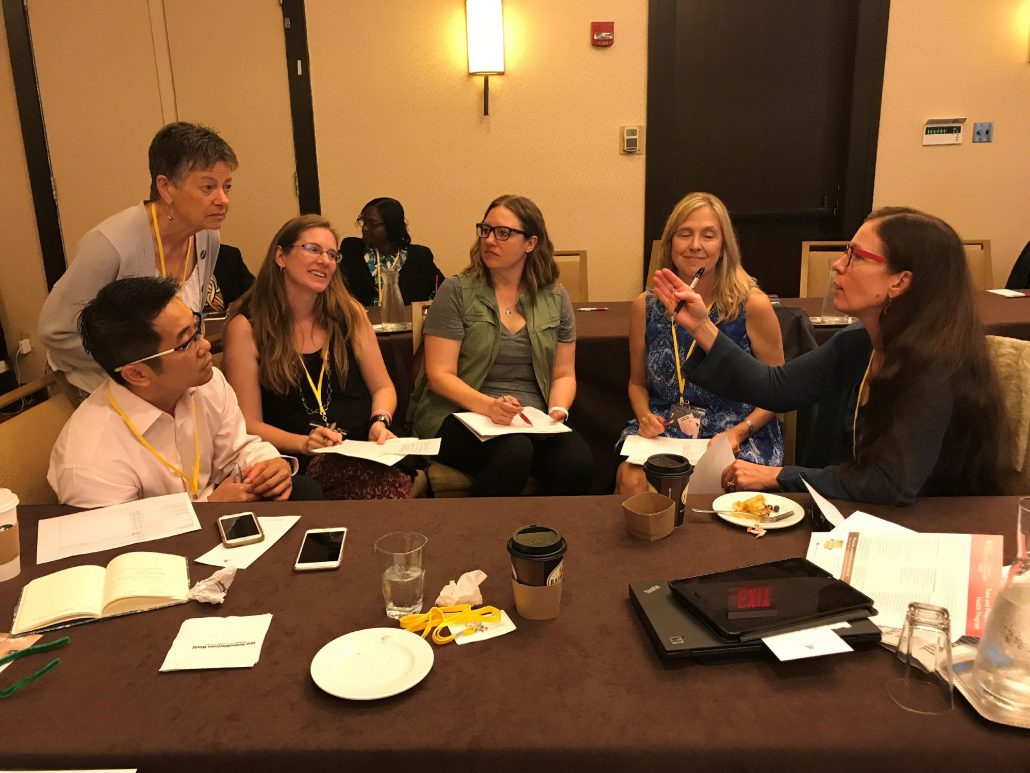
In small groums, parents, survivors, researchers and medical professionals discussed different genetic scenarios and the implications for patient and family care at the 2017 One Retinoblastoma World meeting in Washington D.C., USA.
17. Heritable, Hereditary, and Familial
Heritable: A genetic mutation that can be passed on to the next generation, but is not necessarily inherited from a parent.
Hereditary: A genetic mutation that has been passed from parent to child. The parent may or may not have had retinoblastoma.
Familial: Retinoblastoma affecting more than one member of the same family, caused by the same RB1 mutation.
Why This Matters
50% of retinoblastoma is caused by a heritable RB1 mutation that can be passed to the next generation, but only 5-10% of retinoblastoma is actually inherited from a parent. Both heritable and hereditary mutations may also be called a “constitutional mutation”.
Without genetic testing, young siblings and first cousins of a diagnosed child are routinely examined regularly under general anaesthetic for signs of cancer. Genetic testing of blood relatives, especially young siblings, can identify those truly at risk of retinoblastoma, and eliminate regular screening eye exams for the majority.
18. RB1 Gene Deletion and Chromosome 13q Deletion
RB1 Gene Deletion: a mutation in which all or a portion of DNA in the RB1 gene is lost, but the rest of chromosome 13, on which it is located, is otherwise unaffected.
Chromosome 13q Deletion: The loss of DNA on chromosome 13, where the RB1 gene is located. This may involve all or part of the chromosome, including the RB1 gene and adjacent genes.
Why This Matters
Deletion of part of the RB1 gene can initiate retinoblastoma and predispose to later second cancers, but does not have any additional effects. In contrast, the loss of additional parts of chromosome 13 causes a range of symptoms. The combination and severity depend on location and extent of the deletion, but may include symptoms such as failure to thrive, global development delay, small stature, low muscle tone, seizures, skeletal and organ malformations.
Understanding a genetic testing report is vital to clarify the child’s true medical situation and appropriate ongoing medical care. It can also manage levels of worry for parents and survivors as they grow up and begin to take control of their own care.
About the Author
Abby’s father was diagnosed with bilateral retinoblastoma in Kenya in 1946. Abby was also born with cancer in both eyes. She has an artificial eye and limited vision in her left eye that is now failing due to late effects of radiotherapy in infancy.
Abby studied geography at university, with emphasis on development in sub-Saharan Africa. She co-founded WE C Hope with Brenda Gallie, responding to the needs of one child and the desire to help many in developing countries. After receiving many requests for help from American families and adult survivors, she co-founded the US chapter to bring hope and encourage action across the country.
Abby enjoys listening to audio books, creative writing, open water swimming and long country walks.

You May Also Like…
TNM Staging System for Retinoblastoma
Retinoblastoma is staged to help doctors describe the extent of cancer in a child’s body, define potential for cure, vision and eye salvage, identify the best treatments, and compare impact of different therapies. Dr. Ashwin Mallipatna explains the TNM Staging System for Retinoblastoma and why it is the best approach for patient care.
EUA Frequency During and After Retinoblastoma Treatment
Parents of children with retinoblastoma ask how often their child’s eyes should be examined under anaesthetic, and if schedules vary depending on type of eye salvage treatment. Abby White, in collaboration with a specialist from one leading US treatment center, helps to answer these important questions.
Under-Treatment and Over-Treatment of Retinoblastoma
Retinoblastoma care is a complex balancing act. Some children receive too little treatment, while others receive more than necessary, with potentially devastating results. Rb survivor and WE C Hope CEO, Abby White explores what under- and over-treatment are, when they may happen, their consequences, and how we can prevent them to ensure every child has the best chance of cure.
Social Media Support: 10 Reasons Why Exchanging Medical Advice can be Unhelpful, and What to do Instead
When someone asks for support on social media, instincts drives us to offer hopeful solutions. But without full knowledge and understanding, we may cause more harm than help. Reviewing real interactions and their outcomes, WE C Hope CEO, Abby White, shares key points to consider when discussing retinoblastoma, and how to respond well.
Planning Your Child’s Eye Cancer Care: A Step-by-Step Guide to Confident Treatment Decisions
Parents face many decisions about their child’s retinoblastoma treatment. The experience can be complex, highly emotive, and stressful. WE C Hope CEO Abby White introduces our new comprehensive guide to making treatment decisions, a tool to help parents navigate the process and make the best choices at every stage of their child’s eye cancer journey.




Share this entry