Tag Archive for: early detection

KnowTheGlow awareness poster. Text reads “See it once, be alert – see it twice, be active”. Know the glow logo is in the bottom left corner. On the right, a child smiles at the camera and a white glow is visible in their right eye.

Breaking Barriers to Early Diagnosis: Revisit a Year of Action

Early Diagnosis is the foundation of effective retinoblastoma and second cancer care. Yet, many families and survivors around the world face complex, delayed diagnostic journeys. WE C Hope CEO, Abby White, reflects on the 2024 #RbEarlyDiagnosis campaign, exploring key themes, family and medical perspectives, global collaborations, and the progress our One Rb World community is making toward faster access to life-saving care.

Two young girls and a boy sit smiling in front of a Christmas tree, all wearing pyjamas. One of the girls holds a baby girl who has a white glow in her left eye.

Angels and Zebras: How Life-Saving Holiday Pics Reveal Children’s Rare Eye Cancer

Happy Holidays from World Eye Cancer Hope! We love a white Christmas and the season’s festive glow – angels, fairy lights, iced cakes, candles, and snow… But we do not like a white glow in children’s eyes. Rb Survivor and WE C Hope CEO Abby White explains how festive Holiday photos could save a child’s life, and even their sight.

A composite of two photos, each showing a baby boy with identical inward turning left eye.

The Life-Saving Power of a Squint: When to Investigate a Child’s Turned Eye

Evalynn, Gabriel, Abby and John all developed strabismus (squint or turned eye), one of the most common signs of retinoblastoma. This can also occur in healthy eyes or affect multiple family members without eye cancer. Sandra Staffieri, Retinoblastoma Care Co-ordinator at the Royal Children’s Hospital, Melbourne, explains, and answers the key question – when should parents and doctors be concerned?

A quote is centred near the top over a vivid ocean sunset scene. Text reads: Some journeys don't have endings, they lead to new beginnings. These are the journeys that lead to great adventures! Near the bottom of the image, smaller italicized text reads: Alex Haditaghi | from Softly, As I Leave Her, 2016. In the ocean scene, the white sun is low on the horizon, casting a golden path of sparkling light across deep blue water. The sky is rich with colour – bright goldenrod near the sun, fading into soft honey pastels and a deepening blue above. A bunting of wispy clouds reflects the warm glow.

One Retinoblastoma World: A New Realm of Discovery

When Retinoblastoma Care Co-ordinator Sandra Staffieri left Australia in August 2012 for a conference in Italy and a tour of Rb centres in North America, she had no idea how radically the journey would change her life and care at the Royal Children’s Hospital, Melbourne. Yet as she departed, One Rb World, the key destination on her trip, was not even on her itinerary. 12 years later, the impact of that trip continues…

Close-up image of a young African child wearing a cartoon pattern t-shirt, looking directly at the camera. The child's left eye has a noticeable white glow. Over the softly focused background, white text reads What if their eye is telling you something? Below a horizontal golden line is the gold KNOW THE GLOW® logo and the text PREVENT CHILDHOOD BLINDNESS. In the bottom right corner are the Kenyan flag and crests of the government and Kenyatta National Hospital, Nairobi.

Gut Feelings Matter: How Parent Instinct and Intuition Detect Childhood Eye Cancer Early

Strong parent instinct and intuition often lead to a child’s eye cancer diagnosis. Rb Survivor and WE C Hope CEO, Abby White explores what they are and how they differ, why they are so important for retinoblastoma early detection, why primary care providers should take them seriously, and how they impacted the diagnosis journey of four children.

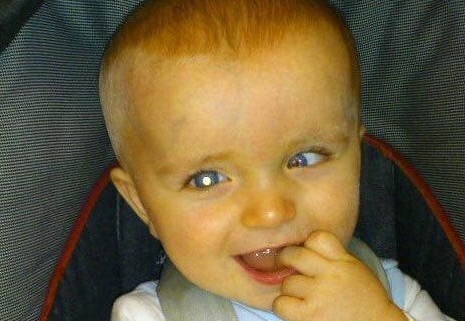
A baby boy looks at the camera. his right eye shows a white reflex while his left eye is turned in towards his nose.

When ‘Something’ Looks the Same As ‘Nothing’: Strabismus, Leukocoria and Childhood Eye Cancer

Strabismus (turned eye) and leukocoria (white pupil), the most common signs of retinoblastoma, can also occur in healthy eyes. Sandra Staffieri, Retinoblastoma Care Co-ordinator at the Royal Children’s Hospital, Melbourne, examines both and answers the key question – when should parents and doctors be concerned?