
When Worries Feel Too Big: How Worry Eaters Help Children Carry Less Through Cancer Care
Published: Monday September 14, 2026 for the Child Life in Rb Care Campaign
Childhood eye cancer affects the whole family, often throughout life. Children often carry many worries alone, with potentially negative impacts on their wellbeing and development. WE C Hope CEO, Abby White, and Child Life Specialist, Morgan Livingstone, highlight why early, ongoing family support is vital, and introduce the wonderful Worry Eaters who are hungry to help children thrive.
The Long Emotional Journey of Childhood Cancer
September is Childhood Cancer Awareness Month. Under the gold ribbon flag, we highlight the strides in treatment and cure; challenges to early diagnosis and survival; and funding needs for research, treatment access, and support. We come together as a global family to advocate for life-saving, life-enhancing care for
Most important, we shine the floodlights on the full human experience of childhood cancer and its profound lifelong impacts – including the emotional experience of the youngest patients.
Retinoblastoma is unique among childhood cancers. Most often diagnosed before two-years-old, the child’s young age requires frequent, repeated eye examinations and treatment under general anaesthetic. Siblings may also need screening eye exams, and for families affected by an RB1 mutation, cancer risk remains lifelong. These realities shape how parents and children experience and carry their stress.
Babies and young children sense, think about, and hold far more than most adults realise. We often hear incorrect beliefs like, “it’s good they’re so young; they won’t remember”. Even when a child is too young to form cognitive memories, their body remembers. Stress and trauma embed themselves in the body’s cells as feelings, behaviours, and emotional and physiological responses that unfold as children grow.
This is why children of all ages need psychosocial care throughout their childhood cancer experience. Child life specialists focus on the whole child: supporting emotional, social, and developmental wellbeing across diagnosis, treatment, survivorship, and family life. Child life services in paediatric cancer care reduce stress burden and trauma risk, and give the diagnosed child and their family the best foundation for good mental health.
Throughout 2025-2026, WE C Hope’s #RbChildLife Alphabet of Hope promotes the vital need for child life in retinoblastoma care. The campaign shares practical approaches that help children and families cope, heal, and thrive. Arriving at letter W, the whimsical Worry Eater is a gentle, playful, and deeply respectful companion for children – ready to hold space and lighten the load.
What Does a Child’s Behaviour Communicate?
Many children experience stress long before they have the words or healthy skills to express what they are feeling. In the midst of emotional overwhelm, the child’s reflexive stress behaviour – driven by their need for soothing and safety – may look like “misbehaviour” to adults.
Stress in children commonly shows up as regression, irritability, tantrums, sleep disruption, withdrawal, or increased clinginess. These responses are especially common during hospitalisation, medical procedures, repeated separations, and periods of uncertainty. All of this is familiar territory for families navigating retinoblastoma care.
Most children with retinoblastoma and their siblings are infants or toddlers at diagnosis. They are pre-verbal, or just beginning to develop language. Even school-age children may lack the vocabulary to name what feels big, heavy, or confusing. Instead, children communicate the stress they are carrying inside through behaviour, expressive and imaginary play, sensory responses, and physical reactions.
Understanding this can reframe how we respond. The question moves from “How do I stop this behaviour?” to “What is my child trying to tell me?” When we meet stress with gentle validation and connection, we help calm the child’s nervous system – creating space for healthy coping, growth, and healing.
Compassionate, developmentally appropriate tools matter here. Children need options that don’t rely on words to express their thoughts, feelings, and worries. They need permission to share – or not share – their fears in a way that feels secure and manageable.
Worry Looks Different at Every Age
Caregivers often ask about their child’s behaviour, “Is this normal?” The short answer is yes. The more complex answer is that worries change with age, development, and life experience. For example:
- Toddlers’ worries often centre on separation, disrupted routines, unfamiliar environments, and loss of autonomy.
- Preschool-aged children may experience magical thinking and self-blame, believing they somehow caused illness or medical events.
- School-aged children become more aware of body changes, differences from peers, and social belonging.
- Teenagers may carry worries about identity, independence, future health, and long-term risk — layered with a growing awareness of the wider world.
All these worries are developmentally appropriate. They are shaped by age, repeated medical experiences, family circumstances, and the child’s unique temperament and coping style.
For specific worries children experience related to retinoblastoma and hospital care – from neonates through to teenagers – visit Morgan Livingstone’s guide to children’s age-related hospital stressors and coping strategies.
Worries are a normal part of childhood – at times very big, and others small; always important to the child. As children have fewer resources to cope compared with adults, they need special care to develop healthy coping skills when stressors pile in.

Meet Worry Eaters Sita and Junior Flint, who belong to our CEO, Abby.
Enter the Worry Eater – Bridging Fantasy and Reality
Talking about worries can be difficult for children – and often for adults too. Writing or drawing worries can empower everyone to express thoughts and feelings that may otherwise feel tangled or too heavy to say out loud. This is why journaling can be so therapeutic in times of deep distress.
“Write down your worries and fears. Feed them to me – I’ll hold them for you.”
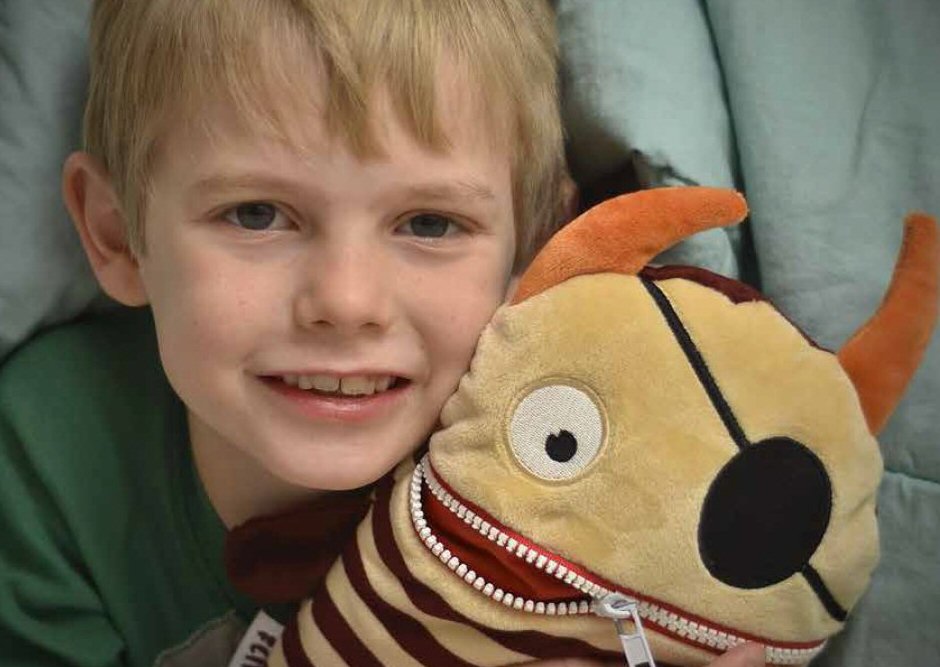
Hungry to help, Worry Eaters are adorable companions that sit beautifully in the space between imagination and lived experience. They offer children a cuddly, playful way to release their worries – to take something they can think and feel inside their mind and body, and place it somewhere safe that is physically outside themselves. They also give parents a gentle way to talk with their child and learn about their worries.
Worry Eaters are a family of delightfully whimsical creatures. There’s a friendly character to suit every personality, eagerly waiting to eat up worries large and small.
Getting help from a Worry Eater is simple:
- The child writes or draws their worry – or chooses an object to represent it.
- They feed the worry into their Worry Eater’s big smiley mouth.
- They zip it away, knowing it is being held safely for them.
This process matters. Externalising a worry helps create emotional distance. “Zipping it away” can offer the child a sense of containment and relief, helping them to regulate the stress in their body.
Drawing and using symbols rather than writing makes the Worry Eater accessible to pre-verbal, non-verbal, and print-disabled children.
“I like that you can open his mouth and he is nice and soft. I wish he was real! I like his zippered mouth.”
Three key principles guide the child’s relationship with their Worry Eater:
- Choice: the child decides what goes in.
- Control: the child decides when and how to feed their Worry Eater.
- Permission not to share: the child decides who can see their worries – they can stay with the Worry Eater alone if that feels safest.
Worry Eaters do not make worries disappear, or stop the experiences that cause the worries. Instead, they give the child space to acknowledge and contain their worries with self-compassion and no pressure.
Worry Eaters During Retinoblastoma Treatment and Lifelong Care
Like all childhood cancer, retinoblastoma can be a potentially traumatic experience for young children and their families; sending shockwaves through their community. The diagnosed child, siblings, cousins, classmates, and friends experience the cancer differently. Each carries their own fears, questions, and emotional responses – often while trying to protect the adults around them.
Diagnosed children may worry about pain, separation, changes to their body or vision, medical procedures, whether cancer will come back, or how the family is hurting. Siblings may worry about their brother or sister and parents, imagine what happens at the hospital, fear being forgotten or that cancer may affect them, struggle with changes to routine and attention, and even feel guilt that they caused the cancer. Friends may feel confused, frightened, or unsure of how to ask questions.
Worry Eaters can help when conversations feel too loaded, when adults are overwhelmed, or when children feel they need to stay silent to protect those they love. By offering a safe space without comment or judgement, the Worry Eater allows the child to say that their worry exists, set it down, and take a step back from the emotional weight of carrying it alone.
In medical settings, Worry Eaters can become a key part of the care team. They can help child life specialists, nurses, doctors, and other healthcare professionals learn more about what matters to a child, especially when direct conversation feels intimidating or draining. Through their huggable friend, children can feel empowered to share important information about their physical and emotional wellbeing, their fears and needs – insights that can shape their medical and supportive care.
“My Worry Eater takes away my bad dreams. I wish everyone had one in their house so he can take away all their worries and their mommy’s worries.”

Worry eaters come in many different forms – you can even make your own.
Using Worry Eaters Well: What Caregivers Need to Know
Parents and other caregivers may struggle to recognize a child’s worries, or know what to do with them and how to offer support. Worry Eaters can be a valuable ally, and work best when adults resist the urge to minimise a worry, fix the problem, or rush the process.
Follow your child’s lead. Some children want to talk about what they’ve shared; others want the Worry Eater to hold onto worries quietly for a while. Both are okay. Sometimes the act of sharing is enough for the child to find their own path forward.
When your child shares their worries with you, take time to acknowledge their concerns and validate their experience. Repeat back to them what you heard them say, and give them words to describe their feelings. For example: “I’m so sorry having the hot drops makes you feel all tied up and you want to kick and shout. It sounds like you feel very anxious and angry; it’s hard when you have to have them so often and you’d rather run away.”
Together, you can reshape your child’s story around each worry, and identify coping strategies that help them feel lighter, calmer and more confident. For example, following on from the above conversation, a parent might ask different questions depending on the child’s age and circumstances, such as:
- Do you need some help to feel calmer when you think about having drops?
- Shall we make a plan to help you feel calmer while you are having the drops?
- What do you think could help you feel better? Giving a few options can guide the child – such as talking about comfort positions and distraction play.
Children may express their worries in the form of big questions – about illness, procedures, the future, fairness, and much more. There may be no clear or easy answers, and it’s okay to say, “I don’t know” in response. Offering honesty, presence, listening, and reassurance matters more than providing certainty.
The child life service at your hospital is an excellent education and support resource to answer your child’s difficult questions and help them understand all aspects of the medical experience.
For step-by-step guidance, including age-specific considerations and ideas to problem-solve together when the time is right, download the Worry Eaters Parent Guide written by Child Life Specialist Morgan Livingstone.
You don’t need to “do” Worry Eaters perfectly, and you are allowed to need help too. Supporting a child through cancer-related stress is hard work, especially when you’re right in the middle of it alongside them. You deserve compassion and care as much as your child does, and perhaps your own Worry Eater too.
Buy or Make Your Own Worry Eater: Inviting Play and Creativity
The award-winning Worry Eaters are available from a range of retailers worldwide, most notably Amazon.
Worry Eaters have inspired other friendly companions, like Worry Monsters and Mood Bears, to feast on children’s worries. All can be found on Amazon.
But you don’t need to buy a worry eating companion. Making your own whimsical worry eater for or with your child can itself be a therapeutic experience.
Crafting a Worry Eater together with your child invites creativity, connection, and a calm space to talk about worries. The shared experience can reinforce safety and playful self-expression, and validates your child’s thoughts and feelings.
Child Life Specialist Jocelyn Leworthy’s make-your-own video offers a fun, low-cost, accessible way to bring a Worry Eater into your home using everyday materials. Let your imagination fly, and make your unique Worry Eater a buddy who says worries are welcome and held with care.
You + Me = WE (Worry Eaters) – We’ll Get Through This Together
Retinoblastoma is far more than a cancer of the eye in childhood. It affects the whole child and their entire family. It shapes emotions, relationships, identity, and how those affected move through the world – often for the rest of their life.
Coping tools like Worry Eaters do not erase fear, pain, or uncertainty. But they can help children carry less of the burden alone. They assure children that their worries matter, they are heard, and support can meet them where they are. And they empower caregiving adults to talk with, learn more about, and support the child so they can thrive through and beyond cancer.
“Let me carry your worries so you don’t have to” says the Worry Eater. “We’ll get through this together.”

This crafty creature is ready to hold your worries and help you feel safe!
About the Authors
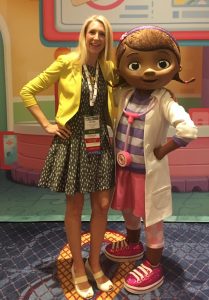 Morgan Livingstone MA CCLS CIIT/CIMI-2 is a Certified Child Life Specialist and Certified Infant Massage Instructor/Trainer. She is passionate about improved child life and psychosocial supports for children and families affected by retinoblastoma.
As the Child Life Officer of World Eye Cancer Hope, Morgan contributes to the website’s Child Life sections, and speaks globally about child life supports for children with retinoblastoma.
Since 2017, Morgan has provided enriched multi-day child life programming for children of all ages at the Canadian Retinoblastoma Research Advisory Board meetings and the One Retinoblastoma World conference.
Morgan also writes and creates resources for children and adults, and participates in child life research studies. She won the inaugural Innovation Grant at Operation Smile for developing an APP that uses Virtual Reality to prepare children receiving cleft lip and palate surgery for their operation.
Download Morgan’s helpful parent manual for supporting children’s worries using Worry Eaters.
Abby’s father was diagnosed with bilateral retinoblastoma in Kenya in 1946. Abby was also born with cancer in both eyes. She has an artificial eye and limited vision in her left eye that is now failing due to late effects of radiotherapy in infancy.
Abby studied geography at university, with emphasis on development in sub-Saharan Africa. She co-founded WE C Hope with Brenda Gallie, responding to the needs of one child and the desire to help many in developing countries. After receiving many requests for help from American families and adult survivors, she co-founded the US chapter to bring hope and encourage action across the country.
Abby enjoys listening to audio books, creative writing, open water swimming and long country walks.

You May Also Like…
Your Child is Not Misbehaving: How Stress Affects Behaviour
All children exhibit undesirable behaviour at times, particularly when they are stressed, but deliberate misbehaviour is rare. Paediatric nurse and child life specialist, Cindy Pilchuk, explores how a child’s brain responds to stress and emotional overwhelm, what their stress behaviour may be trying to say, and how parents and caregivers can help children cope better.
How to Help Your Child Work Through BIG Emotions
Young children are often overwhelmed by big emotions in the natural process of their development. When they face ongoing stressors like cancer or a pandemic, giving them support, tools and skills to learn about and work through their emotions is critical. Child life specialist Rebekah Reimer provides some practical guidance to help.
7 Ways Caregivers Can Support Infant Mental Health during Cancer Care.
Infants experience a wide range of emotions, the depths of which are just beginning to be understood. Morgan Livingstone CCLS discusses how the external environment influences infant mental health, and the varied ways parents and medical professionals can help babies cope and thrive through medical interventions.
Child Life for All Ages: Empowering Children with Cancer to Thrive
Retinoblastoma is a challenging journey for children and their families, often deeply affecting emotional and physical well-being long after treatment ends. Tailored support enhances quality of life during cancer care and beyond. Rb survivor and WE C Hope founder, Abby White; and Child Life Specialist, Morgan Livingstone, explore how child life specialists empower children of all ages and their families to cope, heal, and thrive.
Trauma-Informed Sleep Supports: How to Help Your Child When Traditional Sleep Supports Are Not Enough
Sleep is vital to a child’s healthy development, and there are many simple, practical ways parents and caregivers can support healthful sleep. But what happens when stress and traumatic experiences affect a child’s sleep? Paediatric nurse and child life specialist, Cindy Pilchuk, offers practical trauma-informed sleep supports to aid children’s coping and restorative sleep.




Leave a Reply
Want to join the discussion?Feel free to contribute!